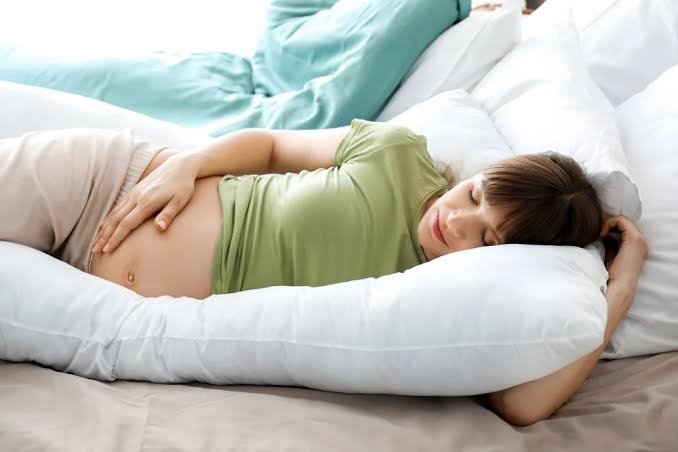
Last updated: August 10, 2026
Quick Answer: For most pregnant people, the safest and most practical place to start is side-sleeping, usually with the left side preferred when it feels comfortable. The right side can work too. The best pregnancy sleep positions — complete guide is the one that eases symptoms and still feels tolerable at 2 a.m. For anyone with a high-risk pregnancy, pain, breathing trouble, bleeding, reduced fetal movement, or a condition like obstructive sleep apnea, speak with a qualified professional before you try to “fix” your sleep position on your own.
Key Facts / Key Takeaways
– Side-lying is the usual first-line pregnancy sleep position; many clinicians prefer the left side when possible.
– A pillow between the knees, plus a small belly support, often improves alignment in 1 night.
– When you wake dizzy, sweaty, short of breath, or nauseated on your back, roll to your side and get medical advice if it keeps happening.
– A gentle upper-body incline may help reflux, but stacking pillows too high can worsen neck pain.
– A position change is not a substitute for medical evaluation when there is bleeding, fluid leakage, contractions, or decreased fetal movement.
– Comfort is not optional: a position that causes hip pain, shoulder numbness, or repeated waking is not working.
Pregnancy sleep positions matter because how you lie down can change comfort, reflux, breathing, and—especially later in pregnancy—blood flow and pressure on major vessels. Short version: side sleeping is generally the position most commonly recommended in pregnancy, and many clinicians prefer the left side when possible, but the best pregnancy sleep positions — complete guide for you can shift with symptoms, trimester, and medical history. For anyone with a high-risk pregnancy, pain, breathing trouble, bleeding, reduced fetal movement, or a condition like obstructive sleep apnea, speak with a qualified professional before you try to “fix” your sleep position on your own.
Who This Applies To — and Who Should See a Professional Instead
This pregnancy sleep positions — complete guide is for pregnant people trying to sleep more comfortably who want a practical, low-risk way to think about positions, pillows, and common symptoms. It helps most when the pregnancy is uncomplicated and the question is simple: “How should I lie down tonight so I can sleep without making myself miserable?” Still, when anything feels off, check in with a professional. The American College of Obstetricians and Gynecologists recommends discussing concerning symptoms with an obstetric clinician, especially when sleep trouble overlaps with breathing issues, pain, or bleeding.
I would not treat this as a do-it-yourself guide if any of the following apply:
- You have been told your pregnancy is high risk.
- You have vaginal bleeding, fluid leakage, or contractions.
- You have significant pelvic pain, hip pain, or back pain that changes when you move.
- You wake up short of breath, snore heavily, gasp in sleep, or have diagnosed sleep apnea, and you should ask a professional to assess whether the sleep pattern needs treatment.
- You have heart disease, severe anemia, preeclampsia, twins or higher-order multiples, placenta issues, or another condition your obstetric clinician is monitoring closely.
- You notice decreased fetal movement and are wondering if position is the cause, and you should contact a professional rather than trying to self-diagnose.
Those situations can change what “safe and comfortable” means. One setup may help one person and make reflux, nerve compression, airway collapse, or pain worse in someone else. And when you are early in pregnancy and still sleeping comfortably on your back or stomach, there is no need to panic. Changes come gradually. Sleep advice should be practical, not fear-driven. The American Pregnancy Association and ACOG both note that symptoms and trimester matter, so the same posture can feel fine one month and wrong the next.
The goal here is not to force one perfect posture. It is to help you pick the least troublesome position, adjust it sensibly, and notice when a symptom needs medical input rather than a pillow rearrangement. That approach fits the pregnancy sleep positions — complete guide idea much better than any one-size-fits-all rule.
The Step-by-Step Process for Pregnancy sleep positions — The Complete Guide (Done Correctly)
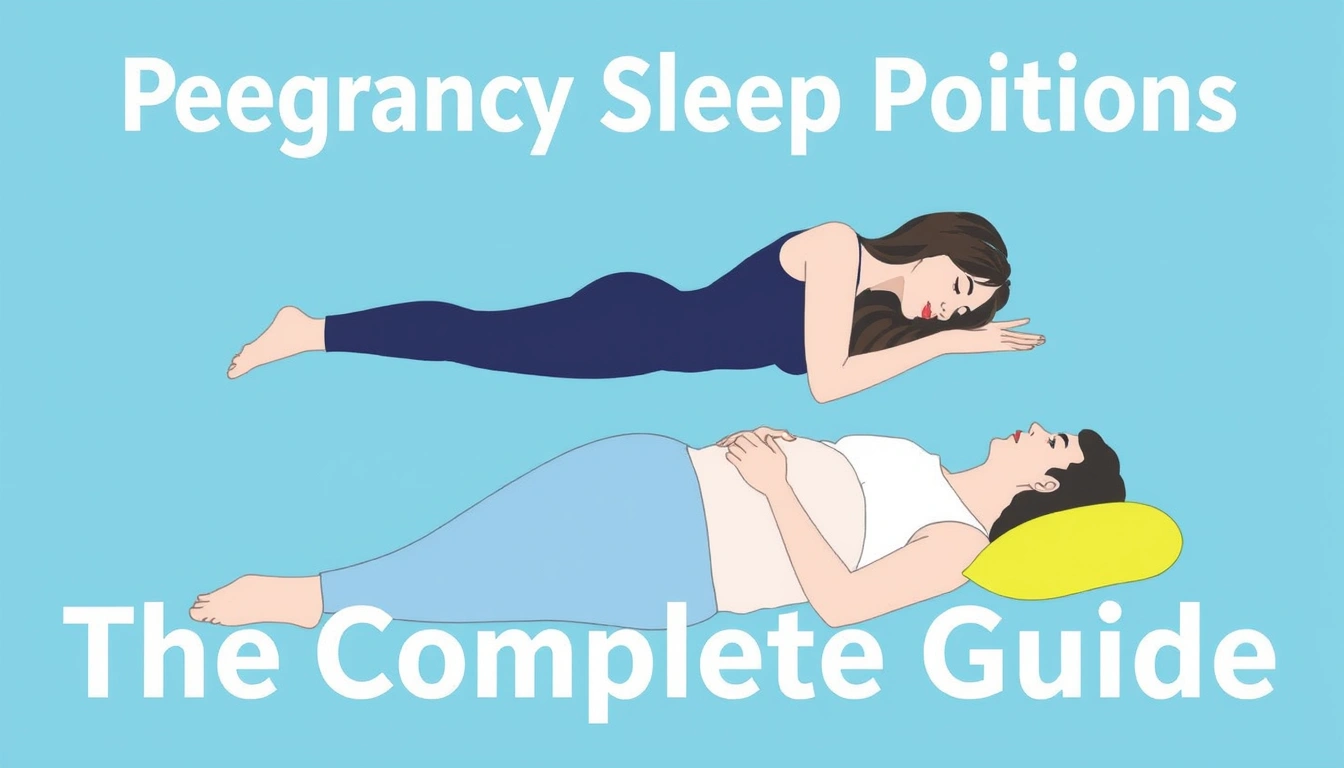
I would treat pregnancy sleep position as a sequence: reduce pressure, support alignment, and watch for symptoms that tell you the position is no longer helping. That sequence is easier to use if you think in small adjustments rather than big changes.
- Start on your side, not flat on your back. Lie on either side with your shoulders and hips stacked as comfortably as possible. Keep your head and neck in line with your spine, and bend your knees slightly rather than twisting at the waist. Check: you can breathe easily and your lower back is not arching hard. Problem sign: numb arms, increased hip pain, or a pinching sensation in the low back usually means your alignment is off.
- Use a pillow between your knees and ankles. Place a firm pillow from thigh to ankle, or at minimum between the knees, so the top leg does not pull the pelvis forward. Check: your top hip feels less rotated and your knees are not pressing together. Problem sign: if your pelvis still feels twisted, the pillow is too thin or too short.
- Support the abdomen if the belly is heavy. Tuck a small pillow, folded blanket, or pregnancy pillow under the lower belly so the abdominal weight is partially supported. Check: the front of your pelvis feels less “pulled down.” Problem sign: if this pushes you forward and strains your shoulder, the support is too bulky or too high.
- Keep the chest and shoulders open. Because a side position works best when the upper body can relax, avoid rolling so far forward that the upper shoulder caves inward. If needed, hug a pillow or place one behind your back to prevent over-rotation. Check: your breathing feels free and your upper shoulder does not feel compressed. Problem sign: shoulder tingling, arm numbness, or rib discomfort suggests you are rotated too far.
- Use a gentle upper-body incline if reflux or breathlessness is part of the problem. Use a wedge or raise the head of the bed slightly rather than stacking many pillows under your neck. Check: your neck stays neutral and you feel less burning or throat irritation. Problem sign: chin-to-chest flexion, neck pain, or worse reflux means the setup is too steep or too lumpy.
- Choose the side that best controls your symptoms. Many clinicians prefer the left side because of anatomy and common teaching around vena cava compression, but comfort matters too and some people sleep better on the right side. Check: your position reduces dizziness, nausea, pressure, or heartburn rather than making them worse. Problem sign: if one side repeatedly causes palpitations, worsening reflux, or pain, switch sides and discuss it with a professional if it keeps happening.
- When you wake on your back, roll back to your side without delay but without panic. A brief, accidental back-sleeping episode does not usually mean harm. Turn onto your side and reset the pillow support. Check: you feel better within minutes after repositioning. Problem sign: persistent dizziness, sweating, nausea, or shortness of breath when supine can mean your body does not tolerate that posture well and deserves medical advice.
- Use the “30-second comfort check” before committing to sleep. After settling in, notice breathing, jaw relaxation, hip pressure, belly pull, and whether you can stay still without gripping the mattress. Check: none of the major pressure points are shouting at you. Problem sign: if you are bracing, stretching, or repeatedly shifting because of one hotspot, the setup needs another pillow or a different side.
A practical point gets missed in generic advice: the “right” position is the one you can keep long enough to sleep without creating a different problem. A setup can look neat and still make your hip ache all night. That is not a win. Honestly, I would rather see a simple side-lying arrangement used consistently than an elaborate pillow fortress that falls apart at 2 a.m. If you are choosing between a perfect diagram and an actually usable bed setup, the usable one wins.
And one more thing: pregnancy sleep positions are not static. What works at 20 weeks may fail at 32 weeks, especially when abdominal size, ligament laxity, and reflux all increase. That is why a good pregnancy sleep positions — complete guide needs a repeatable routine, not a one-time fix.
Critical Checkpoints: What to Verify Before Moving Forward
Before you settle into a position and call it done, I would check four things: comfort, breathing, circulation, and symptom pattern. Those checks matter more than the label on the position, and they also make the advice easier to use in real life.
First, ask whether your neck is neutral. Neutral means your head is not bent sharply forward, backward, or sideways. Shoulders stay level, too. If you wake with a sore neck or one shoulder higher than the other, the pillow height is probably wrong. A thicker pillow is not automatically better. If your ear feels crammed toward your shoulder, the support is too tall. For some people, a pillow around 8 to 10 cm high works better than a tall stack, but the exact height depends on shoulder width and mattress firmness.
Second, check your hips and pelvis. In pregnancy, the pelvis often tolerates a small amount of flexion better than twisting. A pillow between the knees helps keep the top leg from dragging the pelvis forward. If your pubic bone, SI joint, or low back hurts more after you add pillows, the problem may be over-rotation, not under-support. That is why a setup should feel balanced within minutes, not only after an hour.
Third, notice breathing and reflux. Side-lying often helps people breathe more comfortably than flat-back lying, but reflux can still flare if you are too flat or if your torso is bent sharply at the waist. A mild upper-body incline can help some people, though I would keep the neck supported and avoid stacking so many pillows that your chin drops. The Cleveland Clinic notes that GERD symptoms commonly worsen when lying flat, which is one reason a slight incline can matter. Too much tilt starts causing trouble of its own.
Fourth, watch the timing of your symptoms. A position that is fine for ten minutes but causes dizziness, nausea, sweating, or a sense of faintness when you stay there is not a good long-term choice. That pattern deserves attention, especially in later pregnancy, because it may reflect pressure effects rather than simple discomfort. If the symptom appears within 5 to 15 minutes of lying down, take that timing seriously and change position rather than trying to “push through.”
Two common misunderstandings are worth correcting. One is that sleeping on the back is always forbidden. That is too absolute, because a short accidental spell on the back is not the same as intentionally staying there all night. Another is that the left side is mandatory all night. That is also too rigid. The useful question is whether a position causes symptoms and whether a small adjustment improves them. If your body keeps giving you the same warning sign, don’t keep arguing with it.
I also think it helps to track one simple metric: do you fall asleep more easily and wake fewer times after the change? If the answer is yes, the position is probably doing its job. If the answer is no, the setup needs revising or your sleep problem may have a different cause entirely. That kind of check is often more useful than chasing the “best” pregnancy sleep positions label.
Warning Signs: When to Stop and Get Help
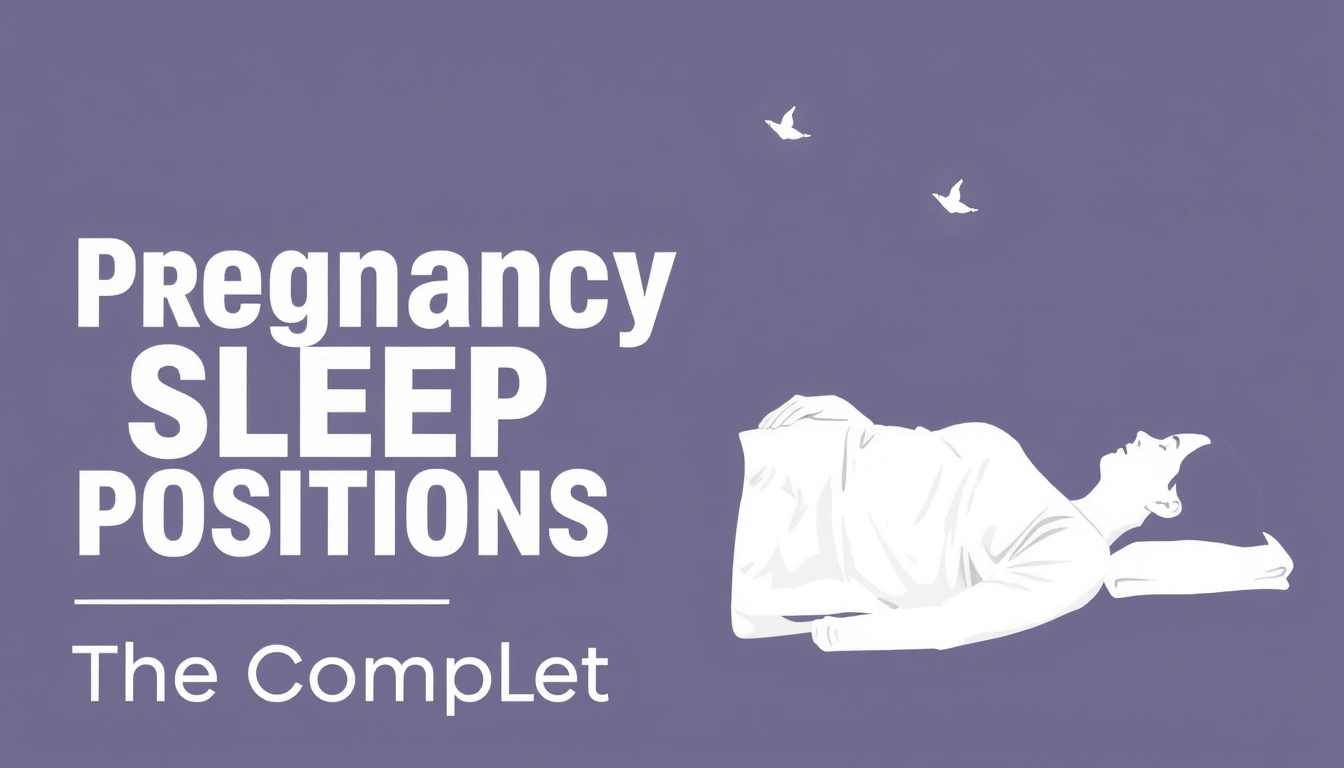
Some symptoms are not “sleep-position problems.” They are medical warnings. When you are unsure, err on the side of contacting your obstetric clinician or another qualified professional, and do not rely on position changes alone.
- Severe shortness of breath when lying flat: This can signal that your body does not tolerate the position or that another problem is present — change position and seek medical advice promptly.
- Dizziness, faintness, sweating, or nausea in the back-lying position: These can be signs of compression effects or poor tolerance — roll to your side and contact a professional if the symptoms recur.
- Vaginal bleeding: Bleeding is not a sleep-position issue to self-manage — seek urgent medical guidance.
- Fluid leakage or contractions: These may mean labor or membrane issues rather than a pillow problem — get evaluated.
- Reduced fetal movement: This is not something to troubleshoot by changing pillows repeatedly — follow your clinician’s instructions for when to call.
- Severe one-sided pain, chest pain, or new swelling with breathing trouble: These can point to a more serious condition — seek urgent care.
- Snoring with choking, gasping, or pauses in breathing: This raises concern for sleep-disordered breathing — ask for professional assessment.
- Persistent pelvic, hip, or back pain that worsens despite position changes: The issue may be musculoskeletal or nerve-related — you may need individualized support from a clinician or pelvic health physical therapist.
The key consequence here is delay. If a warning sign gets treated like ordinary discomfort, time slips away from something that needs evaluation. So consult a professional rather than trying to self-correct a red-flag symptom. Sleep position advice should help comfort, not distract from a real problem.
The Most Common Mistakes (and Their Real Consequences)
The most common mistake is forcing a single “approved” position. Some people hear that left side is best and then spend the night rigidly trying to stay there. The result is often shoulder pain, hip pain, and worse sleep fragmentation. The better alternative is to use side-lying as the main setup, then switch sides when your body asks. A 20-minute shift can sometimes be the difference between settling and staring at the ceiling.
Another mistake is putting all the support under the head. People stack pillows until the neck folds forward, then wonder why they wake with reflux or stiffness. The result is compressed airways and irritated neck muscles. I would choose a gentler incline with the torso, not a tower of head pillows.
A third mistake is ignoring the pelvis. If the knees are not separated, the top leg can drag the spine and sacroiliac region out of line. The result is low-back ache, pubic pain, or waking up feeling “twisted.” The correct alternative is a pillow between the knees and, if needed, another under the abdomen.
A fourth mistake is using a pillow setup that is too soft or too large. A fluffy arrangement may collapse under body weight and leave you in the same bad posture after an hour. The result is repeated waking and frustration. The better choice is firmer support that keeps shape through the night.
A fifth mistake is assuming every symptom is caused by sleep position. Heartburn, shortness of breath, frequent urination, restless legs, and anxiety can all disrupt sleep in pregnancy for reasons that are not solved by moving one pillow. The result is endless tinkering without relief. The correct alternative is to treat position as one tool, not the whole solution, and bring persistent symptoms to a professional. When you are still awake after 30 to 40 minutes, it may be better to reset and address the symptom itself rather than keep rearranging the bed.
A sixth mistake is waiting until pain is severe before making changes. By then, your body may have already learned an irritated pattern. The result is that even a better position feels bad at first. The better alternative is to adjust early and small: one pillow, one side change, one incline, then reassess.
Edge Cases and Modified Approaches
Some pregnancies need a different setup than the standard side-sleep recommendation, and that is where a pregnancy sleep positions — complete guide should get more specific.
If you have significant reflux or heartburn, I would prioritize upper-body elevation with side-lying. A slight incline can reduce backflow for some people, but the angle should be gentle enough that your neck stays relaxed. Too much elevation can create neck strain and slide your pelvis out of alignment. A wedge of about 10 to 15 degrees is often enough for comfort, though you should adjust to what your body tolerates.
If you have pelvic girdle pain—pain around the pubic bone, sacroiliac joints, or hips—your main goal is to reduce twist. A pillow between the knees, a small support under the belly, and a position that keeps the top hip from rolling forward are usually more important than choosing left versus right. If even gentle side-lying hurts, a pelvic health clinician may need to tailor the approach.
If you have obstructive sleep apnea or strong snoring, position alone may not solve the problem. Side-lying is often favored because back-lying can worsen airway collapse in some people, but formal assessment matters. If you wake unrefreshed, gasp, or get told you stop breathing, bring that up directly, and ask whether testing is appropriate.
If you have multiple pregnancy, significant swelling, or cardiovascular issues, position advice should be individualized. Pressure on circulation, shortness of breath, and comfort can shift quickly. You should not assume a generic pillow setup is enough.
If you have twins or a very large abdomen, the standard pillow-under-the-belly trick may need to become a wedge or a body pillow that prevents your torso from tipping forward. The point is not more pillows. The point is better load distribution.
If you are a stomach sleeper, I would not force a hard stop in early pregnancy if it is still comfortable and your abdomen allows it, but the position usually becomes less practical as pregnancy advances. When it no longer feels good, side-lying is the more realistic target.
If you have back pain, slight knee flexion and a pillow between the knees often help more than lying perfectly straight. Straight lines sound elegant and often sleep badly. Human spines are not planks, and they rarely stay comfortable in one rigid shape for long.
What to Expect: Realistic Timeline and Outcomes
A good pregnancy sleep position usually does not “fix” sleep in one night. I would expect an adjustment period. The first night may feel awkward, especially if you are changing from back or stomach sleeping. Over several nights, your body often settles into the new pattern if the support is sensible. Many people need 3 to 7 nights before