
Last updated: August 10, 2026
- Use the wedge for one pressure point and the body pillow for whole-body positioning .
- Key Facts – A wedge pillow is a small, angled cushion for localized support .
- – Choose a wedge for incline needs and compact bed space .
- Then I’d start with a wedge pillow .
Quick Answer: For most pregnancy sleep setups, a wedge pillow is the better choice for targeted belly, back, or reflux support, while a body pillow is better for side-sleeping comfort and hip/knee alignment. Want one simple rule? Use the wedge for one pressure point and the body pillow for whole-body positioning.
Key Facts
– A wedge pillow is a small, angled cushion for localized support.
– A body pillow is a long pillow for full-side sleeping support.
– Choose a wedge for incline needs and compact bed space.
– Choose a body pillow for hugging, knee support, and side-sleep stability.
– Pregnancy sleep discomfort can have different causes, so a qualified professional can help if symptoms are unusual.
– Prices vary by retailer and change often, so current pricing should be checked before buying.
Belly pressure? Back ache? Acid reflux? Then I’d start with a wedge pillow. But if the real issue is staying on your side and feeling supported from hips to shoulders, a body pillow makes more sense. Not the same problem. Not even close.
I write about sleep gear and pregnancy support products, and I keep coming back to one question a tired person asks at 2 a.m.: what actually helps without turning the bed into a pillow pile? Honestly, that trade-off matters. Because this is a health topic, I want to be plain about one thing early: pregnancy sleep discomfort can have different causes, and it is sensible to speak with a qualified professional about your own situation, especially if you have pain, swelling, reflux, snoring, or any symptom that feels unusual. The American College of Obstetricians and Gynecologists notes that side sleeping is generally preferred in pregnancy, especially later on, and that guidance shapes how both pillow types are used. ACOG
The Real Difference Between a Wedge Pillow and a Body Pillow
A wedge pillow wins when the issue is targeted support. Small and angled, it props up one area — under the belly, behind the back, or beneath the upper torso. A body pillow wins when the issue is whole-body positioning. Long enough to wrap around, hug, or tuck between the knees and ankles, it often makes side sleeping feel less strained.
That split matters more than most people expect. One is a tool. The other is closer to a sleep setup. If the discomfort is local — a heavy belly, acid reflux that gets worse lying flat, or the need for a slight tilt — the wedge usually makes more sense. If the trouble is spread out — hips, knees, shoulders, and the constant effort of staying on one side — the body pillow usually does more. Simple. And surprisingly, that’s where a lot of shopping mistakes begin.
Here’s the cleanest way I’d put it: a wedge changes one angle; a body pillow changes your whole arrangement in bed. The wedge is smaller, easier to place, and less likely to take over the mattress. The body pillow is more enveloping, though it can get awkward if you share a bed or toss around at night.
A generic article often says, “Try both.” True, but not very helpful. The better question is: which sleep problem is loudest? That answer usually points to the right pillow.
Wedge Pillow: Who Should Actually Use This (and Who Shouldn’t)
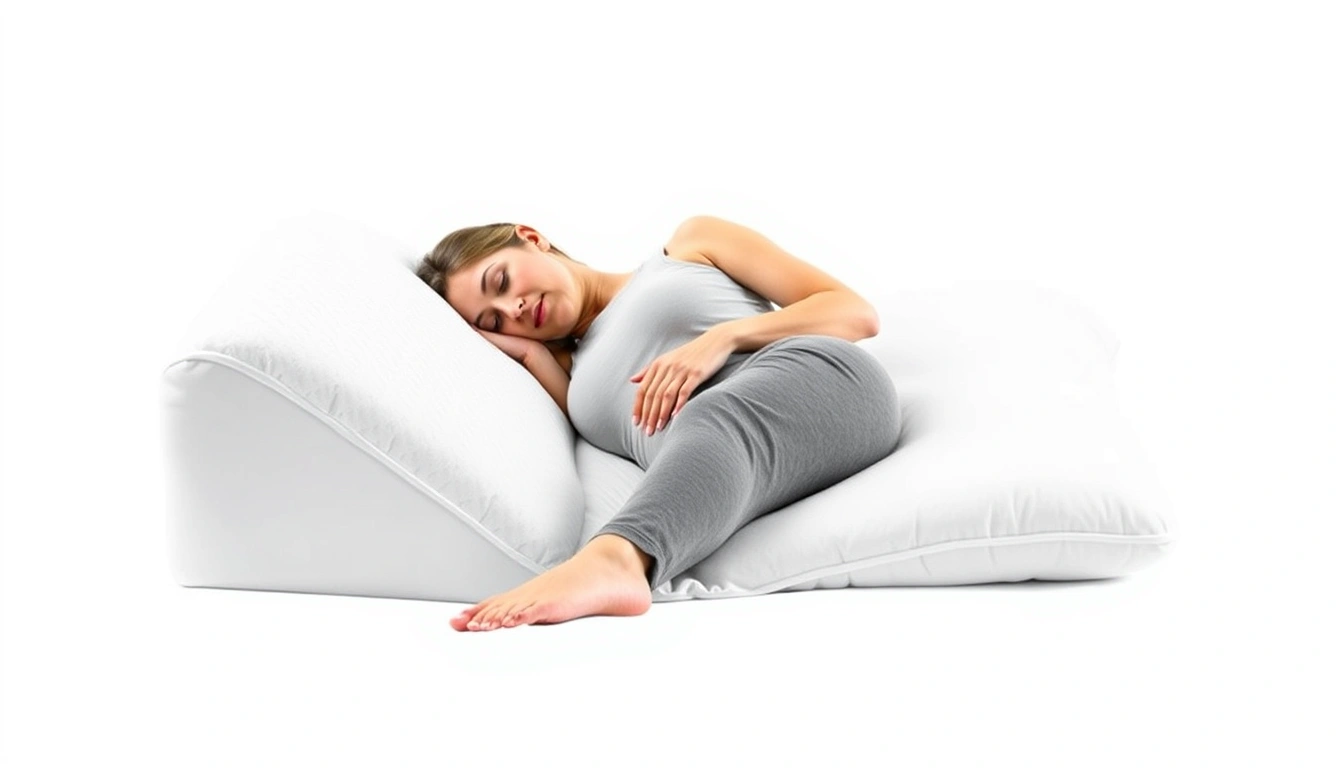
A wedge pillow wins for the person who wants one specific pressure point relieved without turning the bed into a pillow obstacle course. Need support under the belly? Want a little elevation for the upper body? Need a cushion behind the back to reduce rolling? The wedge is the cleaner fix.
Its strength is precision. You put it exactly where it belongs, and because it is compact, it does not force your hips, legs, or shoulders into a fixed position the way a body pillow often does. That makes wedges especially appealing for people who feel overloaded by big sleep props or who wake up irritated when they have to wrestle with bedding.
A wedge also tends to work well when the issue is reclining comfort rather than full-side sleeping comfort. If lying flat feels bad, a slight incline can help some people feel less compressed in the chest or throat. That said, I’m careful here: people’s experiences vary, and pregnancy symptoms can have different causes. A health professional can help you decide whether elevation is appropriate for your situation.
The drawback shows up fast once you actually sleep with one: a wedge is not a complete body-support solution. It may prop up your torso or belly, but it will not automatically keep your knees aligned or stop your top shoulder from collapsing forward. If the pain is coming from hips or low back, the wedge alone can feel too limited. Some people also find wedges too firm, too angled, or too small to stay comfortable all night. It can be a bit of a brick.
I would not pick a wedge if you want one pillow to replace most of the others on your bed. I also would not make it your first choice if your biggest complaint is that side sleeping hurts your hips and knees.
Body Pillow: The Specific Situations Where It Wins
A body pillow wins when the problem is side-sleeping stability. If you keep waking because your top leg drops, your hips twist, or your shoulders feel pinched, a long pillow can make side sleeping feel more anchored. That is the big upside: it supports multiple points at once instead of one.
For example, the pregnant sleeper who wants to hug something, brace the belly, and keep a pillow between the knees may find a body pillow especially practical. It can cut down on nightly fiddling because it creates one position you can settle into. For people who hate the “one pillow under here, another under there” routine, that matters.
Body pillows are also better if your discomfort is broad rather than isolated. They can help distribute your weight more evenly and may reduce the feeling that your spine is bending into a banana shape. For many side sleepers, that is the difference between “I am still awake and shifting” and “I can stay still long enough to fall asleep.”
But I wouldn’t oversell them. A body pillow takes up space, which can be a real drawback in a small bed or with a partner. It can feel bulky when you need to get up at night, and some people find it traps too much fabric and too many limbs. It can also be overkill if all you need is a bit of belly or upper-body support. In that case, the pillow is doing too much and still missing the mark.
I would skip the body pillow if you mainly need gentle elevation or if you already feel crowded in bed. It is the better all-position tool, not the sharper one.
The Honest Side-by-Side
| Criteria | Wedge Pillow | Body Pillow | Winner for [condition] |
|---|---|---|---|
| Belly support | Good for targeted lift under the belly | Good if shaped around the body, but less exact | Wedge for local support |
| Side-sleeping comfort | Limited on its own | Strong, because it supports the whole side-lying position | Body pillow for side sleepers |
| Hip and knee alignment | Usually needs a second pillow | Often handles this better by running between the legs | Body pillow |
| Reflux or upper-body elevation | More useful because it creates an incline | Not the right tool for elevation | Wedge for incline needs |
| Bed space | Compact and easier to fit | Takes up more room | Wedge for small beds |
| Ease of getting in and out of bed | Usually easier to manage | Can feel cumbersome | Wedge for convenience |
| All-night position stability | Depends on placement; can slip out of usefulness | Often better at keeping you planted on your side | Body pillow |
| Minimalist setup | Better if you want one small support piece | Better if you want one item to replace several pillows | Depends on the problem |
| Who may dislike it | People needing full-body support | People who feel crowded or dislike bulky bedding | Neither is universal |
Most comparison posts dodge this part, but the winner changes with the symptom. Need an angle? The wedge wins. Need alignment? The body pillow wins. That is the rule I would actually use.
Our Verdict: Which One to Choose and Why
Choose a wedge pillow if your main problem is localized discomfort, reflux-friendly elevation, or needing a small support that does not take over the bed. Choose a body pillow if your main problem is staying comfortably on your side, supporting your hips and knees, and reducing the feeling that your whole body is twisting at night. Neither if you have significant pain, shortness of breath, severe swelling, persistent reflux, or any symptom that feels out of the ordinary — talk with a qualified professional.
If I had to make the call for the average pregnant sleeper who is asking, “Which one will help me tonight?”, I’d say this: body pillow first for general pregnancy side-sleep discomfort; wedge pillow first for reflux or belly-specific support. That is the cleanest split.
Why? Because pregnancy sleep problems are usually not one problem. They’re a cluster. A body pillow handles the cluster better when the complaint is “everything feels off.” A wedge handles it better when the complaint is “one spot needs help.” That is why a wedge can be brilliant for one person and nearly useless for another.
If you are shopping, remember the practical side too. Look for either type at multiple retailers so you can compare current options and return terms; many people will see body pillows and wedges sold through Amazon, Walmart, the brand site, or other major home-sleep retailers. I would care more about shape and firmness than about marketing language. And because prices change constantly, check the current price before deciding. Consumer Reports has long emphasized comparing support products by fit and comfort rather than by claims alone. Consumer Reports
When to Reconsider This Choice Entirely
A few exceptions flip the usual answer.
First, choose a wedge over a body pillow if reflux or chest discomfort is the main issue. A body pillow may make you feel supported, but it does not create the incline that some sleepers are seeking. If elevation is the problem, the wedge is the more direct tool.
Second, choose a body pillow over a wedge if you keep waking from hip or knee strain. In that case, you need a position holder, not a prop. A wedge can sit there looking helpful while your lower body still twists.
Third, consider neither if you cannot get comfortable because of pain that is sharp, persistent, or worsening. A pillow is not a substitute for evaluation. The right next step may be professional guidance, not more bedding.
Fourth, reconsider both if you are a restless sleeper who changes positions often. A wedge can end up abandoned because it is too fixed. A body pillow can end up feeling like furniture. Some people do better with a simpler setup, such as a single support between the knees or a small pillow under the belly, rather than a large specialty pillow.
My plain recommendation is this: do not buy based on the idea of “pregnancy pillow” as a category. Buy based on the sleep problem you are trying to solve. The wedge is the better specialist. The body pillow is the better all-around comfort piece. The right one is the one that matches the complaint that wakes you up.