Last updated: August 10, 2026
- A position that works at 20 weeks may fail at 32 weeks.
- When the pillow system collapses after 20 minutes, the fix is not really a fix.
- The basic premise is straightforward: in pregnancy, the goal is not perfect sleep.
- Many people report restless legs or calf cramps in pregnancy.
Quick Answer: In pregnancy sleep safety and problem solving, the best practical place to start is side-sleeping with support, a cooler room, and quick medical review for warning signs; when sleep turns uncomfortable or anxious, the target is safer, more comfortable rest — not perfect sleep.
Key Facts
– Pregnancy sleep safety and problem solving usually starts with side-lying, pillow support, reflux control, and cooler bedding.
– There is no single perfect sleep position for every pregnant person.
– Symptoms such as severe shortness of breath, chest pain, one-sided calf swelling, vaginal bleeding, or reduced fetal movement need prompt professional review.
– Most comfort changes are low cost: many pillows cost about $10-$40 each, while wedges and mattress supports often range from about $20-$100 depending on type and brand.
– The safest position is the one you can tolerate without worsening symptoms, unless a clinician has given you different advice.
– When snoring, gasping, or daytime sleepiness are present, pregnancy sleep safety problem solving may need medical evaluation for sleep apnea or another disorder.
Sleep gets tricky fast. During pregnancy, that matters.
When sleep has become uncomfortable or anxious during pregnancy, the safest starting point is simple: talk with a qualified maternity professional about your own situation, then use positioning and environment changes to reduce pressure, reflux, and overheating. In pregnancy sleep safety and problem solving, most sleep problems are manageable, but the right approach depends on your symptoms, trimester, and medical history.
Who This Applies To — and Who Should See a Professional Instead
This guide is for pregnant people who want practical, low-risk ways to sleep more comfortably and reduce avoidable hazards during pregnancy. It is especially useful if you are dealing with back pain, heartburn, congestion, frequent waking, leg discomfort, or uncertainty about sleeping position.
I’m writing for someone trying to solve an actual problem, not gather generic tips. When you are in the second or third trimester and wondering, “Is this position safe?” or “Why am I waking up on my back?” — good. You are in the right place.
The basic premise is straightforward: in pregnancy, the goal is not perfect sleep. The goal is safer, more comfortable sleep, with fewer triggers for breathlessness, reflux, pain, and poor circulation. Some changes are general and low risk. Others need individualized advice.
Before changing sleep habits on your own, speak to a qualified clinician when any of the following apply:
– high blood pressure, preeclampsia, or swelling that is getting worse
– placenta problems, vaginal bleeding, or cramping
– twin or higher-order pregnancy
– significant back pain, pelvic girdle pain, or hip pain
– asthma, sleep apnea, severe snoring, or waking up gasping
– severe reflux, vomiting, or trouble keeping food and fluids down
– reduced fetal movement, if you are at a stage where movement is expected and you have been told to monitor it
– a history of preterm birth or other pregnancy complications
DIY sleep tweaks are usually reasonable when the issue is comfort, not danger. They are not enough when you are dizzy, short of breath at rest, having regular contractions, bleeding, or noticing a major change in how you feel. Those problems need professional guidance.
One myth keeps getting recycled in generic posts: there is no single perfect sleep position for every pregnant person. Nope. Recommendations vary with trimester, anatomy, reflux, pain pattern, and any medical complication. The practical aim is to find the safest position you can tolerate and to know when symptoms mean you need an exam rather than a pillow.
The Step-by-Step Process for Pregnancy Sleep Safety and Problem Solving — The Complete Guide (Done Correctly)
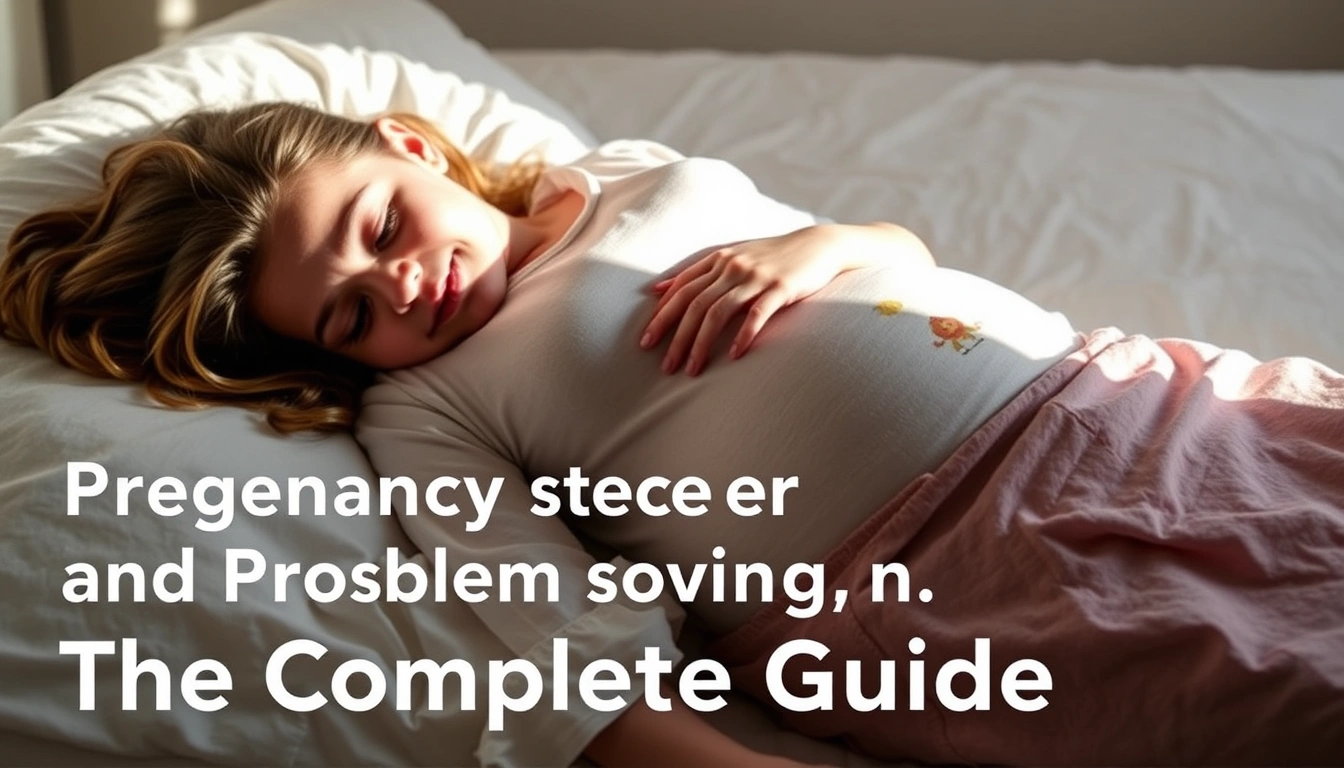
Start from the outside in. Safety first. Then posture, symptom control, and finally the room itself. I would not rush into buying special gear before checking the basics.
-
Choose a primary sleep position that does not increase symptoms.
The common starting point is side-sleeping, often the left side because it may be easier for reflux and may feel more comfortable for some people. If you cannot stay on one side all night, that is not automatically a problem. To verify: you can breathe comfortably, your heartburn does not flare, and your hips or pelvis are not being strained. A problem is suggested by numbness, worsening pelvic pain, chest tightness, or waking feeling faint or short of breath. -
Use pillows to support the body, not just to “prop you up.”
Place a firm pillow between the knees, one under the top arm, and, if needed, a small pillow or folded blanket under the belly. The key detail is alignment: the hips should stay stacked rather than twisted, and the spine should feel neutral rather than bent forward. To verify: you can roll slightly without collapsing into the mattress. A problem is suggested by shoulder pain from overstacking pillows, hip pain from poor alignment, or numb hands from upper-body compression. -
Manage reflux with a left-tilt and head-of-bed elevation.
If heartburn is a major issue, raise the head of the bed with stable blocks or a wedge designed for sleeping; extra pillows alone often bend the neck without helping the torso. A modest incline is usually more useful than a steep one. To verify: you feel less burning after lying down and you are not sliding downhill. A problem is suggested by neck pain, sliding into a curled position, or worse cough and throat irritation. -
Reduce pressure on the bladder and pelvis before bed.
Finish fluids earlier in the evening if your clinician has not told you otherwise, empty your bladder before sleep, and avoid long stretches of sitting with legs dangling late at night. Specific parameter: when you are waking repeatedly to urinate, review late-evening drinks, caffeine, and swelling patterns. To verify: fewer urgent bathroom trips and less pelvic heaviness. A problem is suggested by pain with urination, fever, blood in urine, or sudden increase in frequency, which needs medical review. -
Address leg discomfort and cramping with gentle, safe movement.
Many people report restless legs or calf cramps in pregnancy. A brief walk, calf stretch, or ankle movement before bed can help some people feel less restless. To verify: the discomfort eases after movement and does not come with swelling, redness, or warmth. A problem is suggested by one-sided calf swelling or pain, which could signal a clot and needs urgent evaluation. -
Cool the room and simplify bedding.
Pregnancy can make overheating more likely. Use breathable layers, keep a glass of water nearby if allowed, and avoid heavy blankets that trap heat. To verify: you are not waking sweaty, flushed, or breathless. A problem is suggested by overheating with dizziness, palpitations, or feeling unwell, especially if it is frequent or severe. -
Build a sleep routine that lowers arousal, not just “relaxation.”
Keep the last 30 to 60 minutes before bed predictable: dim lights, reduce screens, and do one quiet activity. That matters because fragmented sleep often worsens when the nervous system stays activated. To verify: you fall asleep with less mental churn and fewer awakenings from alertness. A problem is suggested by racing heart, panic, or persistent insomnia that spills into the day. -
Reassess the setup when symptoms change.
A position that works at 20 weeks may fail at 32 weeks. Re-check the sleep setup when pain shifts, reflux worsens, or breathing changes. To verify: the new arrangement reduces the specific problem you are trying to solve. A problem is suggested by symptoms that keep escalating despite changes, which means the issue may not be mechanical alone.
The key idea is simple. Sleep safety in pregnancy is not just about one “correct” posture. It is about reducing compression, heat, reflux, and pain while watching for signs that the problem is medical rather than positional.
Critical Checkpoints: What to Verify Before Moving Forward
Before assuming a pillow fix will handle everything, I’d check four things.
First, name the main sleep issue. Is it pain, reflux, shortness of breath, frequent urination, anxiety, snoring, or plain insomnia? Different causes need different solutions. A side-sleeping setup helps one kind of problem and barely touches another.
Second, look at the timing. Symptoms that happen only when you lie flat point toward positioning or reflux. Symptoms that show up even when upright can suggest another issue, such as anemia, asthma, a sleep disorder, or a pregnancy complication. Sneaky stuff, really.
Third, check whether the discomfort is one-sided or generalized. One-sided calf pain, one-sided swelling, or one-sided pelvic pain deserves much more attention than general soreness. Pregnancy changes can be common; asymmetry raises the stakes.
Fourth, check whether the setup is stable. A good sleep position should not make you feel as if you are balancing on a stack of cushions. When the pillow system collapses after 20 minutes, the fix is not really a fix.
I also pay attention to three practical parameters:
– Can you get into and out of bed without strain?
– Can you turn safely if you wake at night?
– Can you breathe and swallow comfortably in the position you chose?
If the answer to any of those is no, the sleep plan needs adjustment.
One point generic posts often miss: “sleeping on the left side” is not a magic rule. For some people, the right side is better tolerated and still safe as a practical sleeping position when side-lying is the goal. The important thing is to avoid prolonged flat-on-back sleeping if it triggers symptoms, and to use the position that keeps you comfortable enough to rest.
Another checkpoint is your mattress. A very soft mattress can worsen pelvic pain because the body sinks and twists. A very firm one can increase shoulder and hip pressure. The right surface is the one that lets your spine stay reasonably neutral and your pressure points stay tolerable.
When your sleep problem keeps growing after these checks, I would stop treating it as a simple comfort issue and consult a professional. Persistent insomnia, loud snoring with gasping, repeated nighttime choking, or daytime sleepiness deserve professional review because sleep-disordered breathing is common enough to matter and is often missed. The American Academy of Sleep Medicine notes that obstructive sleep apnea can be underrecognized, and pregnancy can increase the need to evaluate symptoms rather than assume they are harmless (AASM).
Warning Signs: When to Stop and Get Help

I want to be direct here. Some sleep symptoms in pregnancy are not “just pregnancy.”
Severe shortness of breath: When you cannot speak in full sentences, feel air hunger at rest, or cannot lie down without distress — seek urgent medical assessment.
Chest pain or pressure: This is not a normal sleep complaint — get immediate help, especially when it comes with sweating, nausea, fainting, or pain radiating to the arm, back, or jaw.
One-sided calf swelling, warmth, or pain: This can point to a blood clot, which needs urgent evaluation — do not massage the leg or wait it out.
Vaginal bleeding or regular cramping: These are not sleep-position problems — contact maternity care promptly, and seek urgent care when heavy or painful.
Severe headache, visual changes, or sudden swelling: These can be warning signs of preeclampsia or another serious issue — speak to a clinician right away.
Reduced fetal movement after the stage when movement is expected: When you notice a clear decrease from the baby’s usual pattern, call your maternity provider promptly for advice.
Burning with urination, fever, or back pain: These can indicate a urinary tract infection or kidney infection — get assessed rather than trying to sleep through it.
Waking up gasping, choking, or with loud snoring that is new or severe: This can suggest sleep apnea or another sleep-related breathing issue — ask for evaluation.
Ignoring these signs has a cost. It is not just poor sleep. Delayed care can miss conditions that matter for both pregnant person and baby. Sleep advice helps only when the problem is truly a sleep problem.
The Most Common Mistakes (and Their Real Consequences)
One common mistake is forcing a single “perfect” position all night. The consequence is often more pain, not less. A person may twist their hips, tense their shoulders, and sleep more poorly than before. The better alternative is to set up a stable side-lying position and allow small shifts through the night.
Another mistake is stacking too many pillows under the upper body. The consequence is neck flexion, shoulder strain, and sliding into a curled posture that can worsen reflux. A better alternative is a real wedge or bed elevation if reflux is the main issue, with the head and torso supported together.
A third mistake is treating frequent waking as only a hydration problem. In reality, nocturia can be related to bladder pressure, swelling shifting at night, caffeine timing, or infection. The consequence of ignoring the pattern is missed diagnosis, so when frequent waking is persistent or comes with pain, urgency, burning, fever, or swelling, consult a professional. The NIDDK notes that urinary symptoms can reflect infection and should not be dismissed (NIDDK).
A fourth mistake is assuming back sleeping is always dangerous in the same way for every person and every moment. That leads some people to panic unnecessarily when they wake briefly on their back. The better approach is to return to side-lying if it feels better, then focus on a practical setup that makes side-sleeping easier. If back-lying causes symptoms, treat that as a comfort and positioning issue first; if it causes dizziness or shortness of breath, treat it as a medical issue.
A fifth mistake is ignoring snoring and daytime sleepiness. The consequence can be weeks or months of poor sleep quality with no evaluation for a breathing disorder. The better alternative is to tell a clinician when snoring has become loud, when you wake choking, or when you feel unrefreshed despite enough time in bed.
A sixth mistake is using heating pads, heavy blankets, or poorly placed pillows to “push through” pain. The consequence can be overheating or pressure on joints and nerves. The alternative is lighter bedding, shorter periods of heat if cleared by a professional, and a more neutral body position.
The pattern behind these mistakes is simple: people often try to overpower the symptom instead of identifying it. Sleep in pregnancy usually improves faster when the cause is named correctly.
Edge Cases and Modified Approaches
Some situations need a modified sleep plan, not the standard advice you see in short posts.
When you have significant pelvic girdle pain, I would reduce asymmetrical positions. Keep the knees closer together, move as a unit when turning, and avoid wide leg separation. A pillow between the knees can help, but when it makes the pelvis feel stretched, it is the wrong tool for that body.
When reflux is severe, side-lying alone may not be enough. A modest upper-body incline can help some people, but a steep wedge can strain the neck and worsen sliding. The modification is to elevate the torso and not just the head, and to avoid late meals if your clinician has given you eating guidance.
When you have asthma or feel breathless at night, do not assume pregnancy alone explains it. Side-lying may be more comfortable, but nighttime wheezing, cough, or tightness should be assessed. The modified approach is to optimize the underlying lung condition with a professional rather than just changing pillows.
When you snore loudly, gasp, or wake with headaches, think about sleep apnea, meaning repeated breathing pauses during sleep. In pregnancy, that pattern deserves a conversation with a clinician because ordinary sleep advice may not solve it. The modification is evaluation, not more bedding.
When you are carrying twins or have a high-risk pregnancy, I would avoid making strong assumptions from general internet advice. Body position, symptoms, and fetal monitoring needs may differ. The modified approach is to ask the maternity team what is appropriate for your specific case.
When you have pelvic floor symptoms such as pressure, leakage, or a heavy sensation, the issue may not be only sleep posture. A pelvic floor physical therapist can sometimes help tailor positioning and night-time movement, depending on your care plan.
When you are waking from anxiety rather than physical discomfort, no pillow arrangement will fully solve it. A low-stimulation bedtime routine, daytime support, and discussion with a professional may matter more than sleep gear.
The honest limitation here is that some sleep complaints are not fixable at home. Frustrating? Sure. But it is useful to know early. The right move is not to keep stacking up hacks; it is to identify which problem is mechanical, which is medical, and which is both.
What to Expect: Realistic Timeline and Outcomes
When sleep changes help, the benefit is often partial first, then clearer over several nights. I would not expect one adjustment to solve every symptom at once.
A position change may reduce reflux or hip strain the first night, but it may take a few nights to find the right pillow height and mattress balance. That is normal. Fine-tuning is part of the process.
When the main issue is frequent bathroom trips, the improvement depends on the cause. Some people do better after shifting fluid timing and reducing bladder irritation in the evening; others still wake often because the uterus is pressing on the bladder. That is a limitation of comfort strategies, not a failure.
When the problem is insomnia, sleep may improve more slowly than pain or reflux. Insomnia in pregnancy often has both physical and mental pieces. A better sleep setup helps, but it may not be enough without broader support.
When you have been waking on your back, many people are relieved to learn that a brief return to side-lying is the practical goal, not perfection. I would expect more comfort and less panic once the sleep setup feels stable. When waking on your back still triggers dizziness, nausea, or breathlessness, that is not a reassurance issue; it is a reason to talk to a professional.
Realistically, the outcome you are aiming for is not eight uninterrupted hours every night. Pregnancy sleep often becomes lighter, more broken, and more position-dependent. A good plan reduces the amount of suffering attached to that reality. It should help you fall back asleep faster, wake with less pain, and recognize when a symptom is outside the normal range.
The most useful marker of success is simple: you are sleeping in a way that feels safe enough, your symptoms are not escalating, and you know when to ask for help. That is a better standard than chasing perfection.
If I had to leave you with