Last updated: August 10, 2026
We may earn a commission from qualifying purchases at no cost to you.
Quick answer: 1 side-sleep setup is the simplest starting point for most pregnancies, especially after 12 weeks, and left-side sleeping is often preferred because it may ease pressure on major blood vessels. Need a stricter rule for your situation? Check with your clinician, because pregnancy history, twins, blood pressure, pain, reflux, and sleep apnea can change the right choice fast.
- After 12 weeks: side sleeping is the position most commonly recommended in pregnancy guidance.
- Left side: often favored for blood-flow reasons, but comfort matters too.
- Best all-around support: a pregnancy pillow.
- Best compact support: a wedge pillow.
- Best low-cost alignment fix: a knee pillow.
Quick-pick comparison table
| Product | Best for | Rating | Key spec | CTA |
|---|---|---|---|---|
| Pregnancy pillow | Full-body support through all trimesters | 5/5 | Wraparound shape supports belly, back, and knees | Compare the current price on Amazon |
| Wedge pillow | Targeted belly or back support | 4.5/5 | Compact incline for small beds and travel | Compare the current price on Amazon |
| Knee pillow | Hip alignment and lower-back relief | 4.5/5 | Small cushion between knees or thighs | Compare the current price on Amazon |
| Adjustable bed pillow set | Custom stacking for reflux or congestion | 4/5 | Multiple standard pillows for flexible positioning | Compare the current price on Amazon |
| Body pillow | Side sleepers who want one simple support | 4/5 | Long pillow for leg and torso support | Compare the current price on Amazon |
| Mattress topper | Pressure relief when the mattress feels too firm | 4/5 | Adds cushioning without changing sleep position much | Compare the current price on Amazon |
How I picked these

I’m a health and wellness writer who has spent years covering pregnancy sleep, bedding, and comfort gear, and I used the same lens I’d use for any YMYL topic: what helps a pregnant sleeper keep a side-sleeping position more comfortably, what creates less strain, and what is least likely to be annoying at 3 a.m. I did not test these products as a pregnant person, and I’m not claiming firsthand pregnancy experience.
For this kind of roundup, I look at:
- Support shape: Does it help maintain side sleeping, which is the position most often discussed as safest later in pregnancy?
- Pressure distribution: Does it reduce hip, knee, belly, or back pressure?
- Adaptability: Can it work across trimesters as the body changes?
- Ease of use: If a pillow is fussy, many people stop using it.
- Size and bed-sharing impact: Large support gear can be a deal-breaker in a smaller bed.
- Realistic drawbacks: Every option has trade-offs, and I call those out.
I also made sure each pick is something you can usually find from more than one retailer, so you are not stuck with a single checkout page. Compare Amazon with Walmart, Best Buy, or the brand’s own site. That saves headaches. For pregnancy sleep basics, ACOG’s patient guidance on sleep position is a useful reference point. ACOG
Best Overall: Pregnancy Pillow
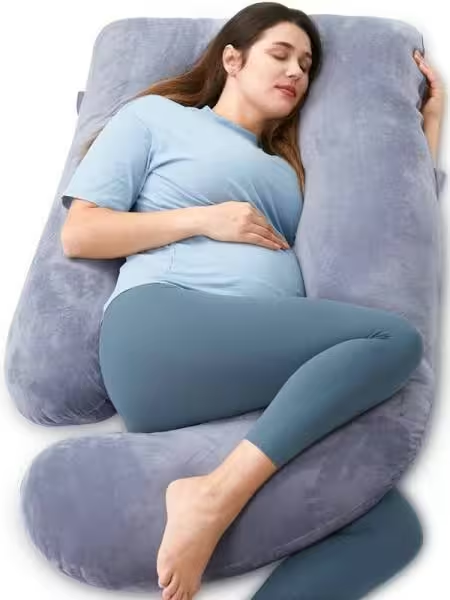
A pregnancy pillow gives the broadest support because it can steady the belly, knees, hips, and often the back too. Later in pregnancy, just staying on your side can feel like arm-wrestling your own joints.
Who it’s for: Side sleepers who want one piece of gear that can do several jobs at once.
Pros
- Supports the belly and knees at the same time, which can reduce the twisting that makes side sleeping uncomfortable.
- Often helps keep the top leg from rolling forward, which can strain the low back and hips.
- Can be rearranged as pregnancy changes and as your comfort needs shift by trimester.
- Useful if you wake up repeatedly and want one setup you can “fall into” more easily.
Cons
- Takes up a lot of bed space.
- Some shapes trap heat, which can be miserable if you already run warm.
- The sheer size can make turning over harder, not easier, for some people.
- Not ideal if you sleep in a narrow bed or share space with a partner who is sensitive to crowding.
Key specs
- Shape: U-, C-, or wraparound-style support
- Best use: Full-body side-sleep alignment
- Main trade-off: More support, more bulk
Compare the current price on Amazon. You can also check Walmart and the brand’s own site if you want more color or cover options.
Best Budget: Knee Pillow
A knee pillow is my best budget pick because it addresses one of the most common side-sleep problems: the top knee drifting forward and pulling the pelvis out of line. Simple. Small. Less annoying than a huge body pillow for some sleepers.
Who it’s for: Sleepers who already side sleep and mainly need help with hip comfort.
Pros
- Small and easy to position.
- Can improve leg alignment without taking over the whole bed.
- Works well in combination with a regular pillow or wedge.
- Less likely to feel hot or restrictive than larger pregnancy pillows.
Cons
- Does not support the belly or back.
- Can slide around if the cover is too slick or if you move a lot in your sleep.
- Some people need firmer support than a small cushion can provide.
- It solves only one part of the pregnancy sleep puzzle.
Key specs
- Shape: Contoured or rectangular cushion
- Best use: Between the knees or thighs
- Main trade-off: Focused support, limited coverage
Compare the current price on Amazon. You can also look at Walmart or a bedding brand’s site if you want to compare firmness and cover fabric.
Best for Belly Support: Wedge Pillow
A wedge pillow is the best pick if your main issue is belly pressure or if you want something compact that can tuck under the bump without eating the whole mattress. I like this option especially for people who feel crowded by full-body pillows.
Who it’s for: People who want targeted support and a smaller footprint.
Pros
- Compact enough for small beds or travel.
- Useful for lifting the belly just enough to reduce the pulling sensation some people feel later in pregnancy.
- Can also be placed behind the back in a side-lying setup for extra support.
- Easier to move around than a large pregnancy pillow.
Cons
- The angle can feel too abrupt if the wedge is firm or steep.
- It helps one spot at a time, not the whole body.
- A wedge alone may not keep you in a side-sleeping position if you tend to roll.
Key specs
- Shape: Sloped foam wedge
- Best use: Under the belly, behind the back, or under the hips
- Main trade-off: Precise support, less total coverage
Compare the current price on Amazon. You can also check the brand site or Walmart if you want a different foam density or cover.
Best for Hip and Back Alignment: Body Pillow
A body pillow is a strong pick if you like the feel of hugging something long and want support from shoulder to ankle. Less fuss, honestly. That makes it appealing if you want comfort without much setup.
Who it’s for: Side sleepers who want a single long cushion that feels familiar.
Pros
- Gives your top leg something to rest on, which can ease hip strain.
- Can be hugged to support the upper body and reduce shoulder tension.
- Simpler shape than many pregnancy pillows.
- Easy to repurpose after pregnancy.
Cons
- May not support the belly as well as a shaped pregnancy pillow.
- Can still take up a lot of room.
- If it is too soft, it collapses and stops doing much.
- Some sleepers find they spend more time repositioning it than sleeping.
Key specs
- Shape: Long rectangular pillow
- Best use: Hugging, leg support, general side-sleep comfort
- Main trade-off: Familiar feel, less targeted pregnancy shaping
Compare the current price on Amazon. It’s also worth checking Best Buy or the brand’s site for fill type and firmness details.
Best for Reflux or Congestion: Adjustable Bed Pillow Set
If pregnancy has brought on reflux or a stuffed-up, can’t-breathe-right feeling, an adjustable bed pillow set can beat a single specialty pillow. Not everyone wants to sleep half-upright. Fair. But when lying flat makes you feel worse, a flexible stack gives you room to experiment.
Who it’s for: People who need upper-body elevation or a custom stack.
Pros
- Lets you build the angle that feels tolerable instead of forcing one fixed shape.
- Can be rearranged if one night needs more height and the next needs less.
- Easy to use with existing pillows.
- Useful if you need to sleep partly elevated for comfort.
Cons
- Stacking pillows can collapse overnight.
- Too much elevation may create neck strain.
- Can be hard to keep aligned if you turn often.
- Not as stable as a shaped support pillow.
Key specs
- Shape: Mix of standard bed pillows or modular inserts
- Best use: Upper-body elevation, custom side-sleep setups
- Main trade-off: Flexibility, less structural support
Compare the current price on Amazon. You can also look at Walmart or the brand site if you want to compare loft and fill.
Best for Small Beds: Mattress Topper
A mattress topper is the pick when the bed itself is the problem. If your mattress feels too firm or creates pressure points on the hip and shoulder, a topper can make side sleeping easier without adding another bulky pillow to the mix.
Who it’s for: Side sleepers on a mattress that feels too hard or unforgiving.
Pros
- Improves pressure relief across the whole sleep surface.
- Helps if your shoulder or hip hurts from direct mattress contact.
- Does not crowd the bed the way large pillows can.
- Can benefit a partner too, which matters if you share a mattress.
Cons
- Does not provide targeted belly support.
- Too-soft toppers can make turning harder.
- Adds cost without solving position control.
- If the mattress already feels unstable, a topper may not be enough.
Key specs
- Shape: Foam or cushioned overlay
- Best use: Pressure relief on a firm mattress
- Main trade-off: Whole-bed comfort, little positional guidance
Compare the current price on Amazon. If you want to compare return policies or firmness descriptions, check Best Buy, Walmart, or the mattress brand’s own store.
Buying guide: how to choose by trimester
Skip the fanciest option; choose the support that makes side sleeping easiest for your body right now.
First trimester
Many people can still sleep in their usual position early on, and some do not feel much difference yet. Even so, this is a good time to build a habit of side sleeping if your clinician has told you to start thinking about it. A body pillow or knee pillow can help you ease into that without feeling trapped.
Second trimester
This is often when a side-sleep setup starts to matter more because the belly grows and the pelvis may feel less stable. For many people, a pregnancy pillow, wedge, or body pillow becomes more useful here. If your main complaint is hip pain, start with the knees. If it is belly pull, start with a wedge or pregnancy pillow.
Third trimester
Comfort tends to become the priority here because the abdomen is larger and turning can feel awkward. Full-body support often helps most, but size matters. If a big pillow makes you feel boxed in, a wedge plus knee pillow can be a better combination than a giant all-in-one cushion.
Common mistakes
- Choosing a support pillow that is too soft: it may look plush but collapse under your leg or belly.
- Going too big too fast: if a pillow crowds you or your partner, you will stop using it.
- Ignoring the mattress: a bad mattress can sabotage even good positioning gear.
- Fighting your body all night: if a position causes pain, numbness, dizziness, or shortness of breath, that is a reason to ask a clinician about it.
What I’d choose in different situations
- I want one item that solves several problems: pregnancy pillow
- I only need hip support: knee pillow
- I feel belly pressure but hate bulky gear: wedge pillow
- I like a familiar hug-and-sleep shape: body pillow
- I get reflux or congestion when flat: adjustable pillow stack
- My mattress is the real problem: mattress topper
FAQ
Is it really safest to sleep on the left side during pregnancy?
Studies and clinical guidance commonly suggest side sleeping, and the left side is often favored because it may reduce pressure on major blood vessels. Still, comfort and individual medical needs matter too, so I’d ask a qualified professional about your situation.
What if I wake up on my back?
That happens. Many pregnant people do. A common approach is simply to reposition when you notice it. If back-sleeping keeps happening or makes you feel unwell, talk to your clinician.
Can I sleep on my stomach in early pregnancy?
Some people can, especially early on, if it is comfortable. As the belly grows, that usually becomes less realistic. If any position causes pain or makes breathing harder, that is a sign to stop and ask for medical guidance.
Do pregnancy pillows prevent bad sleep positions?
No pillow guarantees anything. They can make side sleeping easier and more comfortable, which is the real goal. The trade-off is that some pillows are bulky, hot, or annoying enough that people abandon them.
What if side sleeping hurts my hips?
That is exactly where a knee pillow, fuller pregnancy pillow, or mattress topper can help. If the pain is sharp, persistent, or one-sided, I would check in with a clinician rather than trying to push through it.