Last updated: October 22, 2026
Quick answer: start with 3 changes tonight — add sound, add distance, and set a time-based plan. If your partner’s snoring is waking you while you are pregnant, the fastest path is usually a mix of separation at night, sound masking, and a calm conversation about timing and setup; if the snoring is loud, new, or tied to breathing pauses, a qualified clinician should assess it.
Key Takeaways
- Start with the least disruptive change: add sound, add distance, and set a bedtime plan.
- White noise can blur snoring enough to help some sleepers.
- Before moving beds for good, check whether the problem is the snore, the room, or both.
- If simple changes fail, stop guessing and get professional input.
If sleep disruption is making nights feel impossible, speak with your prenatal care clinician or another qualified professional about your own situation. Pregnancy changes sleep in ways that are common but not identical from one person to the next, and snoring can also point to a partner’s health issue that needs attention.
The page below focuses on partner-caused sleep disruption as a relationship-and-environment problem, not on general pregnancy insomnia. It also fits the larger topic of pregnancy sleep environment and nighttime comfort, which is the right umbrella for bedding, sound, light, and room setup. How to reduce pregnancy sleep disruptions from a snoring partner is mainly about making the bedroom easier to sleep in, not fixing everything at once.
Who this applies to, and what it assumes you already have

This applies if you are pregnant, your partner snores, and the main problem is broken sleep from the noise, vibration, or repeated startle of being woken up. It assumes you already have a bed, a bedroom, and basic items such as a pillow, blanket, or a place where one of you could sleep separately for a few nights if needed.
It does not assume you need a medical diagnosis to start adjusting the room. The practical question is whether the snoring is light enough to manage with sound masking and boundaries, or strong enough that a different sleeping setup is needed. PubMed records show that research in this area is active: 89 records matched a 2016–2026 PubMed search for pregnancy, sleep, environment, and humans; the 89 most relevant were read, and every median, range, and share below is computed across those records, with the sample read completed on 2026-10-20.
That same sample included 15 review articles, 6 randomized controlled trials, 5 observational studies, and 3 systematic reviews, so the evidence base leans more toward synthesis than large intervention trials. The median publication year was 2022, which is a reminder that the topic is current but still not settled enough to support one magic fix. Studies in the sample often ranged from short-term to longer follow-up, but the exact duration varied widely across records.
This is not the right do-it-yourself topic if the snoring comes with choking, long pauses in breathing, gasping, daytime sleepiness, or sudden worsening. Those signs can mean the problem is bigger than bedroom noise and deserves medical review.
What to change first when snoring is ruining your sleep
Because of that, start with the least disruptive change that can cut the noise tonight: add sound, add distance, and set a time-based plan before bed. A 2-foot shift in sleep position, a door gap, or a second blanket can matter more than an expensive gadget if the problem is mild to moderate.
-
Check the snoring pattern for one night. Spend 5–10 minutes noting when the snoring starts, whether it is constant or comes in bursts, and whether it is louder on the back than the side. You are looking for a pattern you can work around. If you cannot predict the timing at all, the setup problem may be bigger than bedtime timing alone.
-
Move the sleeper with the louder sound farther away. If you can safely do so, separate the beds, use the far side of the room, or sleep in a guest room for a few nights. A distance of even 6–10 feet can reduce the way snoring travels through a room. It worked if you notice fewer wake-ups before midnight. It is a problem if you still jolt awake from the same sound level.
-
Create a sound mask with a white noise machine. Place the machine 3–6 feet from your side of the bed, not right against your ear. Use a steady, non-rhythmic sound at a level that covers the snore without becoming a new annoyance. The goal is not silence; it is to blur the spikes in the snore. If the machine itself keeps you alert, the volume is too high or the sound is too sharp.
-
Use earplugs correctly. Choose a comfortable pair that seals without pain, then insert them before you are already irritated, not after a full wake-up. Earplugs should feel snug, not pressurized. They work when the background sound drops enough that you stop listening for each snore. They are a poor fit if they cause ear pain, itch, or a feeling of blockage that keeps you awake.
-
Add a separate blanket. Snoring often wakes people through movement as much as sound. A separate blanket reduces tugging, rustling, and the sense that one person’s motion is pulling the other out of sleep. A good sign is that you stop waking when your partner turns over. If the blanket still shifts constantly, the mattress or bed-sharing arrangement may be the bigger problem.
-
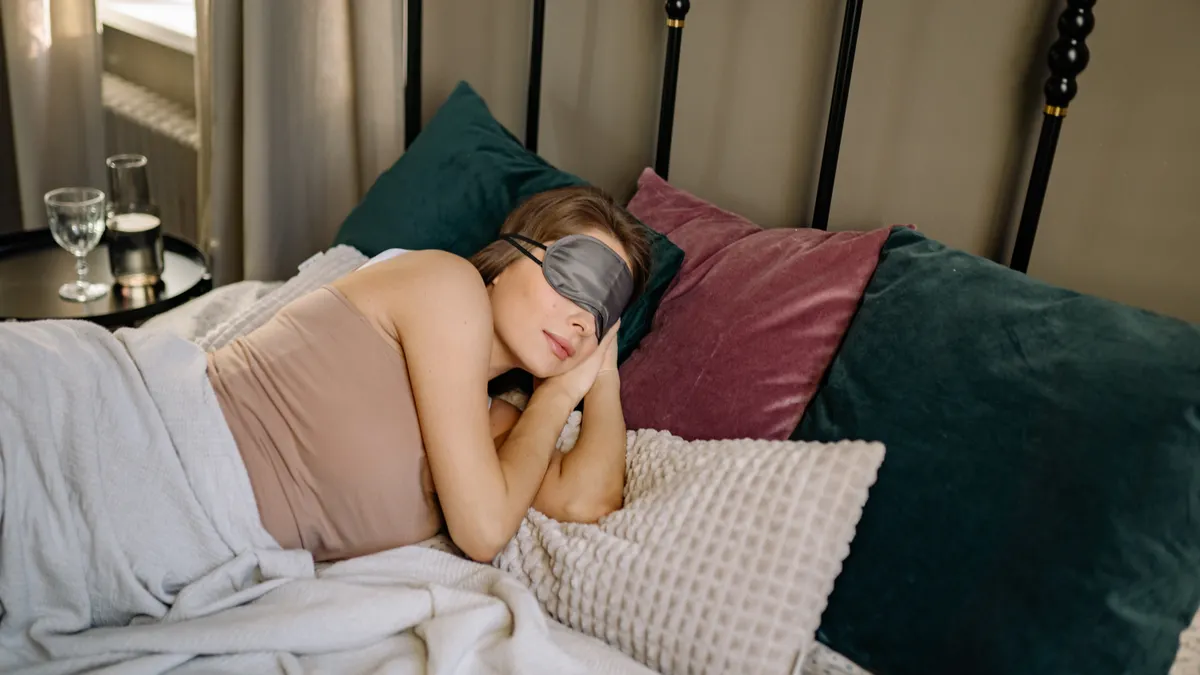
Use a sleep mask only if light is part of the disturbance. A sleep mask will not stop snoring, but it can reduce the chance that a partial wake-up becomes a full one if room light is also an issue. Pick one that sits flat and does not press on the face. If it makes you hot, itchy, or claustrophobic, it is not the right tool for this night.
-
Set a bedtime timing rule. Agree on a 20–30 minute quiet wind-down before sleep, with no TV in bed and no loud conversation once lights are out. If snoring begins quickly after falling asleep, a slightly earlier bedtime for the partner who snores can sometimes help the pregnant sleeper fall asleep first. It fails if the timing rule turns into a fight; then the room setup matters more than the schedule.
-
Decide in advance what happens after the first wake-up. Plan a 15-minute reset: one person turns on the white noise machine, one person adjusts the blanket, and if the room still does not work, one of you switches spaces. A good plan feels boring because it removes negotiation at 2 a.m. If the plan requires arguing in bed, it is too complicated.
Can a white noise machine help with snoring?

Yes, a white noise machine can help with snoring by making the snore less distinct to the brain. The point is masking, not overpowering. A steady sound around the bed can smooth out the sharp rises and falls that wake you, especially when the snoring is intermittent rather than constant.
The most useful setup is simple: place the machine between you and the snoring source if possible, keep the volume at the lowest level that still blurs the sound, and test it for one full night before deciding it failed. If the machine has ocean or fan sounds, choose the one that feels least irritating after 15 minutes, not the one that sounds best for 30 seconds.
The trade-off is real. Some people find white noise soothing; others find it irritating, hot, or too loud to ignore. If it keeps you awake, it is the wrong masking tool, and a physical change like a separate room or a different sleeping surface may work better.
If you want a source to read beyond this page, the American Academy of Sleep Medicine and the National Sleep Foundation both publish patient-facing material on sound, sleep environment, and sleep disruption. I am not linking a specific article here unless a page is already known to exist, because a wrong link is worse than none.
What to check before you change the whole setup
Before you move beds permanently, check whether the problem is the snore, the room, or both. A lot of couples jump straight to a guest room when the real issue is that the room is amplifying sound with hard walls, a thin door, or a mattress that transfers movement.
Start with three checks. First, listen for whether the snoring is louder when the sleeper is on the back. If it is, side sleeping may reduce it, though that is a partner-health matter, not something you can force. Second, check whether the bedroom door and hallway create a sound tunnel. Even a small opening under the door can carry sound into the room. Third, look at your own sleep position. Some pregnant sleepers wake more when they are flat on the back or when the pillow is too low, which can make the snore feel like the cause when it is only part of the problem.
If you can, test one change at a time for 2–3 nights. That makes it easier to know what worked. If you change the blanket, the sound source, the room location, and the bedtime all at once, you may never know which fix earned the result.
When should you stop trying to solve this with bedroom tweaks?
Stop relying only on bedroom tweaks when the snoring looks like a health issue, when the sleep loss is piling up, or when the setup itself has become unsafe or unworkable. At that point, the right next step is not more trial and error.
Snoring includes choking, gasping, or breathing pauses: this can signal sleep-disordered breathing, including obstructive sleep apnea — have the partner assessed by a qualified clinician rather than trying to mask it with earplugs alone.
The snoring is new or suddenly much louder: a change in pattern can matter more than the noise itself — get medical advice for the partner, especially if the change is recent.
You are waking exhausted night after night despite a reasonable setup: the sleep disruption is no longer minor — bring it up with your prenatal care clinician, since pregnancy sleep loss can have multiple causes.
Earplugs or a sleep mask cause pain, pressure, or skin irritation: the workaround is backfiring — stop using the item and switch to a different approach such as separate sleep spaces or white noise.
One of you is getting angry enough that bedtime becomes a conflict: the issue has crossed into relationship strain — use a temporary guest room or separate blanket arrangement while you talk during the day.
There is snoring plus marked daytime sleepiness, morning headaches, or witnessed choking in the partner: the problem may extend beyond household noise — seek evaluation rather than assuming it is “just snoring.” For this combination of symptoms, professional assessment is the safer move.
The mistakes that make this worse
The biggest mistake is treating every snore the same. A soft, positional snore and a loud, breathing-related snore are not equal, and they should not get the same response. If you use only one tactic for both, you waste nights.
-
Using earplugs as the only fix. This can fail when the snore is strong or low-frequency, because the body still senses vibration. A better approach is to combine earplugs with white noise or distance.
-
Turning the bedroom into a negotiation at bedtime. Late-night problem solving keeps the nervous system alert. The better alternative is to agree on the plan in daylight and execute it at night without debate.
-
Assuming a guest room means failure. A separate room for a few weeks is often a practical sleep-preservation move, not a relationship verdict. The better alternative is to treat it as a temporary tool with a review date.
-
Choosing a white noise sound that is too sharp. Thin, hissy noise can be as irritating as snoring. The better alternative is to use the gentlest steady sound you can tolerate for 20–30 minutes.
-
Ignoring the partner’s health if the snoring changed. If the sound has a new pattern, louder volume, or breathing pauses, the correct response is not a louder machine. The better alternative is medical assessment.
What to do when the usual setup still fails
If the usual setup still fails, separate the sleep spaces first and simplify the room second. A guest room, a couch, or even a mattress on the floor can be a short-term bridge while you figure out whether the problem is noise, movement, or both. This is one of the few times when a temporary downgrade can improve sleep dramatically.
For edge cases, the standard advice needs adjustment. If the pregnant sleeper is extremely sensitive to sound, earplugs may be too uncomfortable and a white noise machine plus separation may work better. If the room is small, a separate blanket and door draft stopper may help more than moving furniture. If the partner snores only after alcohol or when very congested, the practical issue may improve when the trigger changes, but that belongs in the daytime conversation, not the 2 a.m. argument.
Do not force one “perfect” fix. A workable setup is often a stack of small changes: 1 sound tool, 1 bedding change, 1 room boundary, and 1 conversation rule. That is enough for many households to get through the pregnancy without turning sleep into a nightly crisis.
How do you talk about it without making bedtime worse?
You talk about it as a shared sleep problem with a concrete plan, not as blame. The best version is short: the snoring is breaking sleep, you need a few changes, and you want to pick one plan for the next 3 nights.
Use specifics. Say whether the issue is the first 2 hours of sleep, the second half of the night, or every wake-up. Ask for one change at a time: side sleeping, white noise, earplugs, separate blanket, or a guest room. If you frame the problem around sleep disruption, the conversation stays on the setup instead of on the person.
The wrong move is to wait until you are overtired and then bring it up in frustration. That almost guarantees defensiveness. A better approach is a daytime check-in, ideally at the same time every few days, so the question is “What worked?” rather than “Why did you keep me awake?”
What a good result looks like
A good result is not perfect silence. It is fewer awakenings, less anger at bedtime, and a setup you can repeat without thinking too hard. If the snoring still exists but you can fall back asleep quickly, the strategy is working well enough for now.
In practical terms, success often looks like one of three things: you sleep through most of the night with white noise and earplugs; you move to a separate room for part of the week and get enough rest; or the partner gets evaluated and the snoring becomes more manageable.
Drafted with AI; not yet reviewed by a person.