
Last updated: October 22, 2026
A bright window, hallway spill, or a snoring partner can wreck a pregnancy night fast. The quickest fix is practical: darken the room, close the obvious sound leaks, then add a steady sound mask before bed. If the sleep is being disrupted by street light, thin walls, or a snoring partner, this article lays out the room setup step by step; for anything unusual or persistent, speak with a qualified clinician about your own situation.
Key Takeaways
- Start with the brightest, noisiest spots, then close gaps, then add masking if needed.
- A bedroom does not need to be perfect, but it does need to be dark and sealed enough for the products to help.
- In pregnancy, lower the peaks of noise rather than trying to remove every sound.
- If the sleep disruption points to more than light or noise, consult a clinician.
Pregnancy sleep can be thrown off by a room that is too bright, too loud, or both. The fix is usually practical, not mysterious: blackout curtains, an eye mask, a white noise machine, earplugs, and a door draft stopper used in the right order. The topic here is how to block light and noise for pregnancy sleep in a way that fits a real bedroom, not an ideal one.
For general sleep guidance, the National Sleep Foundation notes that a dark, quiet room supports sleep, and the CDC also recommends keeping the sleep environment comfortable and quiet. PubMed search results show that pregnancy, sleep, and environment have been studied across a range of human papers, including reviews, trials, and observational studies. National Sleep Foundation, CDC sleep hygiene guidance, PubMed
Who this is for, and what this assumes
This is for a pregnant person whose main problem is the room itself: light from windows, hallway spill, partner snoring, street noise, or a thin wall that seems louder at night. It assumes the sleep problem is environmental, not a separate insomnia pattern or a need for a relaxation routine. It also assumes the reader already has access to basic items such as curtain rods, an eye mask, or a foam earplug pack.
This does not replace medical advice. If loud snoring comes with gasping, choking, or pauses in breathing, if sleep loss is tied to pain, reflux, restless legs, or frequent urination, or if the sleep loss is severe enough to affect daytime safety, speak with a qualified professional about the right next step. A room fix can help, but it does not address every cause of broken sleep.
Think in layers. First comes light, then sound entry, then a steady sound floor that makes sudden noise less jarring. One strong change — blackout curtains, for instance — can make the room feel much calmer, but a draft stopper or white noise machine may still pull more weight afterward. A page on how to block light and noise for pregnancy sleep should cover the whole room setup, not just one product.
How to block light and noise for pregnancy sleep, step by step
Start with the noisiest, brightest parts of the room, then close the gaps, then add masking if needed. The goal is a room that stays consistently dim and predictably quiet for the full sleep period, not one that feels perfect for 10 minutes and then falls apart when a car passes or dawn starts.
- Map the light and noise sources before buying anything. Stand in the bedroom after dark and again near sunrise, then note the brightest opening and the loudest sound source. Look for window edges, a door gap, an alarm clock, a TV standby light, and hallway spill. If you cannot name the main source in 2 minutes, the problem is not yet clear enough to fix efficiently.
- Install blackout curtains that overlap the window opening by several inches on each side. Choose a full-length curtain and mount it so it extends beyond the window frame, then close it and check for light halos at the edges and top. If daylight outlines the frame, the curtain is too narrow, too short, or mounted too close to the glass. A good result is a room that stays dim enough that you can see only large shapes without turning on a lamp.
- Seal the bottom of the door with a door draft stopper or sweep. Place the stopper flush against the threshold so the gap under the door is covered along the entire width. Verify from the hall that light no longer spills under the door and that hallway noise is reduced. If the stopper slides, leaves a gap, or blocks the door from closing fully, it is the wrong size or style.
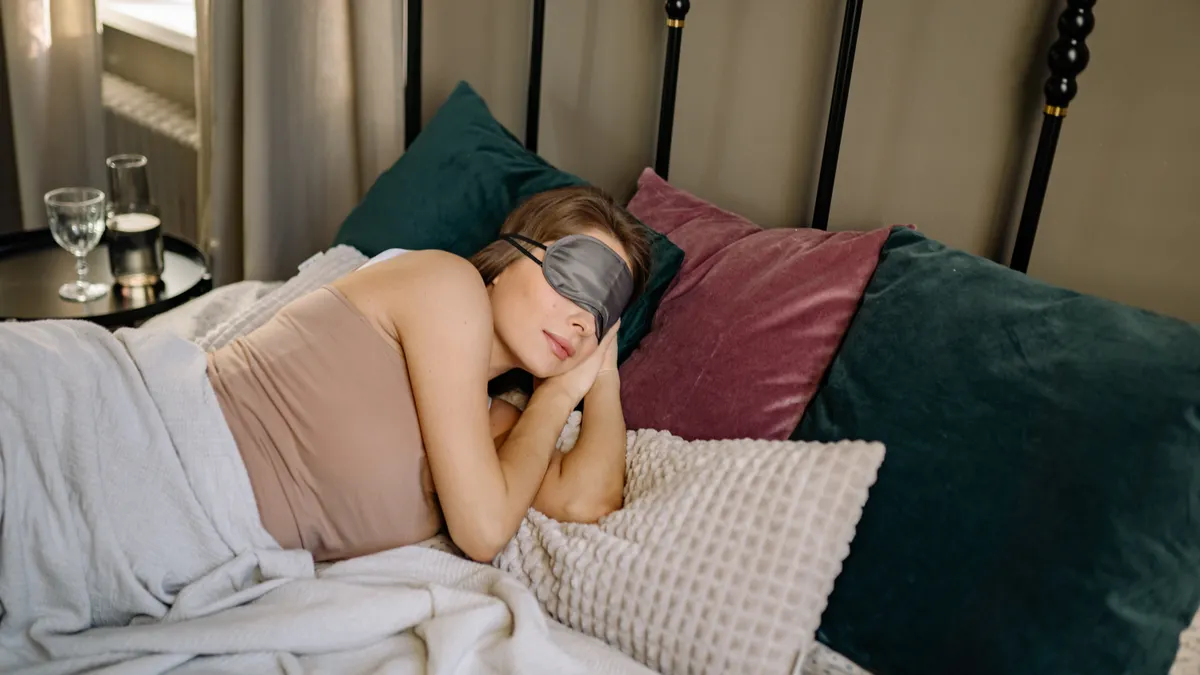
- Use an eye mask if the room still has small light leaks. Pick a mask with a wide, contoured shape so it does not press directly on the eyelids. When it works, the room feels dark even if there is a small gap around the curtain edge or a bright clock display elsewhere. If the mask presses on the bridge of the nose, shifts during side-sleeping, or makes you hotter, try a softer or deeper design.
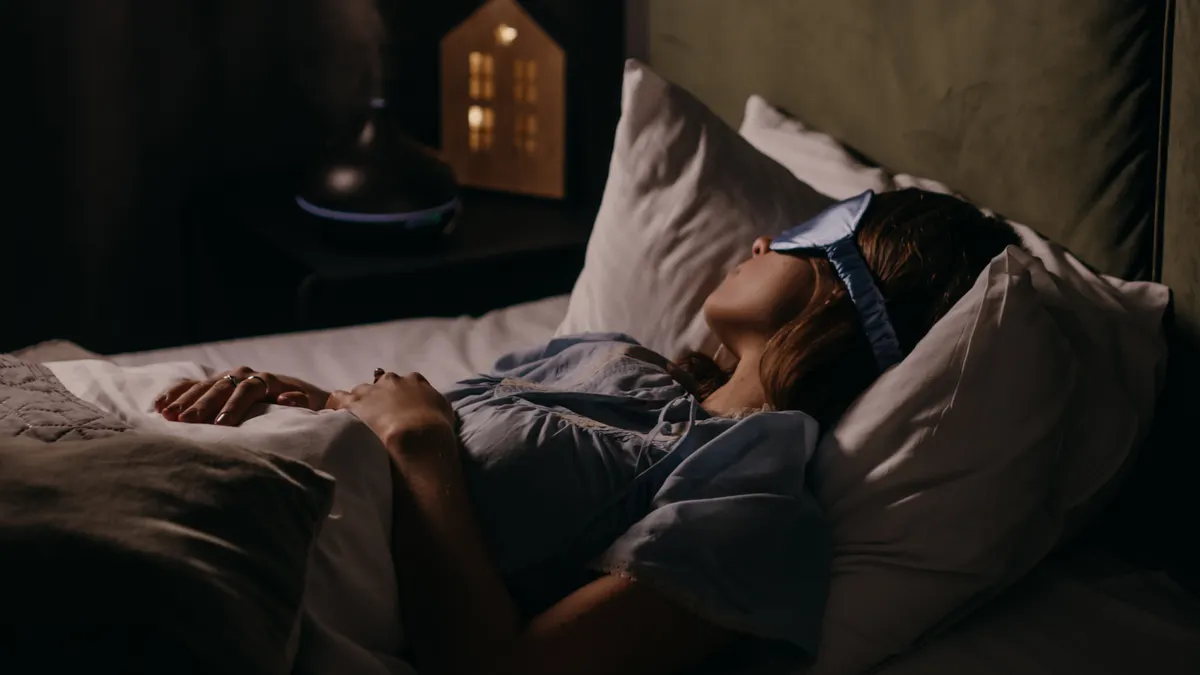
- Add a white noise machine to cover predictable sound spikes. Place it several feet from the bed and set it to a steady sound, not a nature track that changes volume every few seconds. The right setup makes sudden noises less noticeable without making the room feel loud. If the machine must be turned up high to cover traffic or snoring, the room needs more physical sound control first.
- Reduce the source of partner snoring before relying on masking alone. If the snoring is occasional, try positional changes that do not require medication, such as side sleeping or a different pillow height for the snoring partner. For the pregnant sleeper, earplugs plus white noise often work better than white noise alone. If the snoring is frequent, loud, or paired with breathing pauses, the issue needs medical attention rather than more room hardware.
- Test earplugs for fit and comfort before the sleep window starts. Use a pair designed for sleep, insert them so they sit snugly without pain, and check whether you can still hear your alarm at a safe level. If one ear hurts, the plug falls out, or the room sounds distorted in a way that feels stressful, the fit is wrong. Earplugs should lower sharp noise, not create pressure.
- Recheck the room after one full night and adjust one item at a time. If you still woke from light, move back to curtains or the eye mask; if you still woke from sound, adjust the white noise or earplug fit. A good result is fewer awakenings tied to the room, not necessarily total silence. If you change three things at once, you will not know which one helped.
A practical setup for many bedrooms is simple: blackout curtains on the window, a door draft stopper at the threshold, a white noise machine near the bed, and earplugs or an eye mask as backup. That combination is often enough for street noise, thin curtains, and a snoring partner. It is less helpful if the room is repeatedly interrupted by pain, reflux, or bathroom trips, because those are not room problems.
Comparison of common fixes
| Fix | Main use | Typical cost |
|---|---|---|
| Blackout curtains | Reduce window light and dawn brightness | About $20-$80 |
| Eye mask | Block small light leaks at bedtime | About $10-$35 |
| White noise machine | Smooth sudden sounds and traffic spikes | About $20-$60 |
| Sleep earplugs | Reduce sharp, repetitive noise | About $5-$20 |
| Door draft stopper | Cut sound and light under the door | About $10-$25 |
What the room needs before any product can work
A bedroom does not need to be perfect, but it does need to be dark and sealed enough that the products have something to work with. A $20 earplug pack cannot compensate for a glaring clock, and a white noise machine cannot fully cover a wide door gap that lets hallway noise pour in.
Check the window first. If the curtain rod sits inside the frame, the curtain may never block side light well. A better setup is usually wider and longer than the window opening so the fabric covers the edges. Blackout curtains are useful because they reduce both brightness and the visual cue of early morning, which can matter when the body is already more alert in pregnancy. If you still see a bright line around the curtain, the installation, not the fabric, is the weak point.
Then look at the floor and door. A door draft stopper is not only for temperature; it also blocks sound and light at the bottom edge. If the hallway is bright or noisy, that gap can be a surprisingly large leak. The same goes for vents, cracked door seals, and a loose latch. A room that is mostly quiet except for a specific leak is easier to fix than one with many small leaks.
Check the bed position too. If the head of the bed sits directly beside the noisiest wall, a white noise machine may help, but it will not perform like a sound barrier. Moving the bed even a little farther from a shared wall can reduce the impact of repeated thumps or plumbing noise. Sound masking is the term for this kind of steady background sound; it does not stop loud impact noise, and that distinction matters more than people expect.
For a pregnant sleeper, comfort matters as much as blockage. An eye mask must be soft enough for side sleeping, and earplugs must not create pressure that makes the ear sore by midnight. If the room gets too warm, some blackout fabrics and tight masks can add heat. That trade-off matters because overheating can itself wake a person.
How do you sleep with noise when pregnant?
Lower the peaks. That is the job.
A steady background sound, properly fitted earplugs, and fewer room leaks usually work better than one loud fix. Start at the boundary if the noise comes from outside the room: seal the door, close the curtains, and move the bed away from the wall or window that carries the sound. With noise inside the home, such as a partner snoring, a white noise machine is often more useful than a fan because it can be set to a constant level and placed close to the sleeper. A fan may help too, but it also adds airflow, dust movement, and sometimes a hum that is harder to control.
Earplugs are worth considering when the noise is sharp, brief, and repetitive, such as a neighbor door slamming or a dog barking. Fit is the whole ballgame here. A plug that is too large or inserted poorly can be uncomfortable, and discomfort defeats the purpose. A plug that works should lower the abruptness of sound without making the sleeper feel sealed off or unwell.
If the snoring is severe or the noise is irregular and loud enough to keep happening despite masking, the room approach may have reached its limit. At that point, it is reasonable to ask a clinician whether the sleep disruption has a medical cause, especially if the pregnant person also has daytime sleepiness, headaches, or shortness of breath at night.
When to stop and get qualified help
When the room changes are not enough, stop treating this as a room-only problem when the sleep disruption points to something larger than light or noise. In pregnancy, the goal is to improve the environment, but not to ignore a symptom that needs assessment.
Snoring comes with gasping, choking, or pauses in breathing: this may suggest sleep-disordered breathing rather than simple bedroom noise — ask a qualified clinician about evaluation.
Sleep loss is driven by pain, reflux, leg discomfort, or frequent urination: the room can be quiet and dark and the problem can still persist — address the symptom with clinical guidance instead of adding more blackout gear.
The pregnant sleeper feels dizzy, unusually short of breath, or unsafe when waking at night: this is not a curtain issue — seek medical advice promptly.
Earplugs or masks cause ear pain, pressure, skin irritation, or nausea: the accessory is the wrong tool for that body — stop using it and switch to a gentler option or another strategy.
The room setup still fails after the obvious leaks are fixed: repeated awakenings despite blackout curtains, a draft stopper, and white noise suggest the cause may not be environmental — get professional input.
Noise comes from a structural source, such as plumbing, ventilation, or building vibration: portable products may help only a little — ask the landlord, building manager, or an acoustics professional about the source.
A common mistake is to keep escalating volume. That can make the room fatiguing instead of restful. Another is to assume that a louder white noise machine solves every sound problem. It does not. If the source is a deep thud or a bed-shaking vibration, the fix is physical isolation or source control, not more volume.
The mistakes that make the setup fail
People usually fail at this by solving the wrong layer first. The result is frustration, more spending, and a room that still wakes the sleeper at 3 a.m.
-
Buying blackout fabric that is too small. The edges leak light and the room still brightens at dawn. The better choice is a curtain or shade that covers beyond the frame and reaches low enough to block the bottom gap.
-
Using an eye mask as the only light fix. The mask may work for a while, but it can shift, feel hot, or press on the face. Pair it with curtains so the mask is backup, not the entire solution.
-
Turning the white noise machine up too high. A loud machine can become its own problem and make the room tiring. The better alternative is to reduce the room leak first, then use a moderate steady sound.
-
Ignoring the door gap. Hallway light and noise often come from the bottom edge, not the window. A door draft stopper is a small item with an outsized effect in shared housing.
-
Assuming earplugs are the answer for every sleeper. Some people cannot tolerate them well, especially if they sleep on one side and have sensitive ears. If earplugs hurt, use a different combination rather than forcing them.
-
Trying to solve partner snoring with room products alone. The room can be improved, but repeated loud snoring may need clinical attention. Sound masking may reduce the problem, but it may not be enough on its own.
Drafted with AI; not yet reviewed by a person.