
Last updated: October 30, 2026
In short: A daytime nap can help pregnancy fatigue without wrecking nighttime sleep if it is short, early, and predictable. This guide to How to nap during pregnancy without ruining nighttime sleep uses a 20–30 minute nap, taken before mid-afternoon, with an alarm clock set so the nap ends before sleep pressure drops too far. If you have pain, loud snoring, severe daytime sleepiness, or a pregnancy complication, speak with a qualified clinician about your own situation.
Key Takeaways
- Keep pregnancy naps brief, early, and easy to wake from.
- A short nap, often around 20–30 minutes, is usually the safest starting point.
- Earlier in the day is the better default than late afternoon or evening.
- After a poor night, use a nap to steady the day, not to replace nighttime sleep.
A useful rule of thumb is this: protect nighttime sleep first, then use a nap as a pressure-release valve when pregnancy fatigue is winning. Pregnancy changes sleep in ordinary ways — more bathroom trips, more discomfort, a shifted circadian rhythm (the body clock that times sleep and wake), and a lower tolerance for late caffeine. A nap can help, but only if it stays small enough not to erase the sleep pressure that helps you fall asleep at night.
Who this applies to, and what you need first
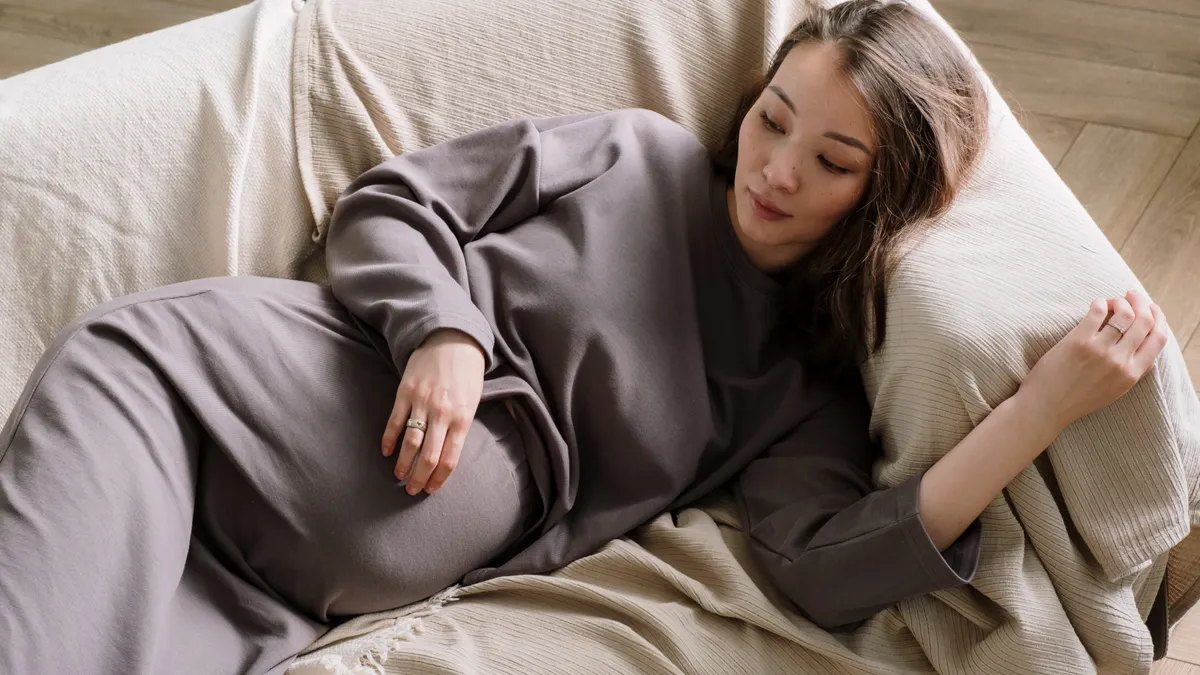
This applies to pregnant people who are tired in the daytime and want a nap that does not turn into a 2-hour sleep break. It assumes you already know roughly when you go to bed, when you get up, and whether your night sleep is usually fragile or fairly steady. It also assumes you have a place to lie down for 20–30 minutes, a way to time the nap, and access to water and a quiet spot.
The daytime nap routine here is for ordinary pregnancy fatigue, not for every sleep problem. It is not a fix for persistent insomnia, severe snoring, gasping, restless legs, or sudden extreme sleepiness. Those situations can point to something that needs a clinician’s attention, especially during pregnancy when sleep problems can have more than one cause. If your sleep has become unsafe, painful, or dramatically different, that is the point to ask a qualified professional about your own situation.
I’m using terms the way sleep clinicians do: sleep pressure means the built-up drive to sleep that accumulates the longer you stay awake; circadian rhythm means the internal timing system that makes sleep easier at night and harder in the wrong part of the day. A nap works best when it relieves fatigue without reducing sleep pressure so much that bedtime arrives and your body is no longer ready.
According to PubMed and ClinicalTrials.gov, 98 PubMed records match this topic for 2016–2026, and 129 trials are registered on ClinicalTrials.gov for this term; the first 100 were read, as of 2026-10-22 (PubMed, ClinicalTrials.gov). The research base is broad but uneven: 16 of the 98 PubMed records are tagged randomized controlled trials, while 5 are systematic reviews and 4 are meta-analyses, so the advice here leans on general sleep principles plus pregnancy-specific pattern recognition rather than one magic protocol.
How to nap during pregnancy without sabotaging night sleep
A pregnancy nap works best when it stays short, early, and boring in the best way possible. The steps below are the core routine. The goal is to wake up with a little more energy, not to enter deep sleep and feel foggy afterward.
- Pick the nap before you feel desperate. Choose the nap when you first notice heavy eyelids, nodding off, or rereading the same paragraph twice. A useful target is a 20–30 minute nap, not an open-ended sleep session. You should see that you can still fall asleep at your usual bedtime. If you only nap once you are utterly wiped out, the nap often runs longer and can push bedtime later.
- Choose a time that protects your night. Aim for early afternoon rather than late afternoon or evening, because the closer the nap gets to bedtime, the more it can steal sleep pressure. Many people do best when the nap ends at least a few hours before bed. What worked: you wake refreshed enough to function, but your nighttime sleep still feels sleepy when it’s time. What signals a problem: you are not sleepy at your usual bedtime or you lie awake longer than usual.
- Set up the room for a short sleep, not a full nap break. Dim the room, mute notifications, and lie down in a position that is comfortable in pregnancy. A pillow between the knees or under the belly can help some people. The setting should be calm enough to fall asleep in minutes, but not so cozy that you drift into a long sleep. If the setup keeps you scrolling, snacking, or talking yourself out of the nap, it is too distracting.
- Use an alarm clock every time. Set one alarm for 20–30 minutes and place it across the room if you tend to snooze. The alarm is there to keep the nap from sliding into deeper sleep. You know it worked if you wake before or at the alarm and feel more alert within 10–15 minutes. A problem is waking groggy, with a dry mouth, or after a much longer block than planned.
- Keep caffeine earlier in the day if you use it at all. Coffee can help some people stay functional, but late caffeine can make nighttime sleep harder, especially when pregnancy already makes sleep lighter. If you drink coffee, keep it earlier than your nap and watch how long it seems to stay in your system. The goal is not zero coffee; it is avoiding the loop of afternoon caffeine, late nap, and bedtime alertness.
- Wake up with light and movement. When the alarm goes off, sit up, drink water, and get out of bed or off the couch within a few minutes. Bright light and a short walk can help your body shift back into daytime mode. What worked: the nap ends cleanly, and you feel able to finish the afternoon. What signals a problem: you stay horizontal for another hour and the nap becomes a second sleep period.
- Track the effect for 3–7 days. Notice whether the same nap length and timing improve your afternoon without harming bedtime. A simple note in your phone is enough: nap start, nap length, bedtime, and how rested you felt the next morning. If a 25-minute nap at 1:30 p.m. leaves bedtime unchanged, that is a good sign. If even short naps lead to late-night alertness, shorten or move the nap earlier.
- Adjust one variable at a time. Change only the length or the timing, not both at once, so you can tell what is helping. Move from 30 minutes to 20 minutes if you feel groggy after waking. Shift earlier by an hour if nighttime sleep gets lighter. If the same pattern keeps failing, the issue may not be the nap; it may be the underlying fatigue or sleep disruption.
A good result looks plain: you wake from the nap feeling less shaky, you can get through the afternoon, and bedtime still comes with normal sleepiness. A bad result looks equally plain: you need a long time to wake up, your evening sleepiness disappears, or you start needing a nap every day just to function. That is not a moral failure. It is a sign the routine needs a smaller nap, a different time, or more help with the underlying sleep problem.
If you want a fuller nighttime strategy, this daytime routine works best as support for the hub on the best sleep routine for pregnancy insomnia, not as a replacement for it.
What is the best nap length in pregnancy?

The most useful nap length in pregnancy is usually short enough to avoid deep sleep, often around 20–30 minutes. That range is long enough to reduce sleepiness for many people but short enough to lower the chance of waking groggy or stealing too much sleep pressure from the night. Anything much longer is more likely to blur into a full sleep cycle and make your evening harder.
Here is why length matters: a short nap can give you a reset, while a long nap can leave you in sleep inertia, the heavy, disoriented feeling that comes after waking from deeper sleep. That groggy window can make the rest of the day feel worse, not better. It can also make it harder to feel ready for bedtime.
A 10-minute nap may help if you only need a brief reset and you are close to the edge of sleepiness. A 20-minute nap is the common sweet spot for many people. A 30-minute nap may work if you are extremely tired and still wake easily. Once naps routinely stretch to 45–90 minutes, the odds rise that nighttime sleep gets pushed later or feels less restful.
The trade-off is simple: shorter naps are easier on night sleep, but they may not fully erase severe pregnancy fatigue. That is one reason nap length is not universal. If you are exhausted every day despite short naps, that pattern deserves a conversation with a clinician rather than more self-experimentation. NICE guidance on antenatal care and sleep complaints makes clear that persistent symptoms in pregnancy should not be brushed aside.
When should you nap, and when should you skip it?
The better default is to nap earlier in the day, not late afternoon or evening. A nap taken closer to bedtime competes with your body clock and can leave you less sleepy at night. If you are trying to preserve nighttime sleep, the nap should end with enough daylight left that your circadian rhythm still recognizes the night as the main sleep period.
You should usually skip the nap if you are only mildly tired and it is already late in the day. In that case, a short walk, a glass of water, a snack with protein, or a change of position may be enough to get you to bedtime without disrupting sleep. The aim is not to nap every time you feel low energy; it is to use nap time selectively.
It also helps to think about your own sleep pattern. If you already fall asleep late, waking from a nap at 5 p.m. may be a bad trade. If you woke very early, slept poorly, and are hitting a wall at 1 p.m., a brief nap may be the better choice. A nap should solve the afternoon, not sacrifice the night.
A generic article often stops here and says “avoid late naps.” That is true but incomplete. The more useful rule is: nap early enough that you still feel sleepy at bedtime, and short enough that you do not enter a long sleep cycle. If you cannot make a nap behave that way, skip it.
What to do after a bad night
After a bad night, the goal is damage control, not revenge sleep. If pregnancy kept you up, a daytime nap can help you function, but it should be smaller than your fatigue suggests. A short, early nap preserves enough sleep pressure to make the following night usable.
Start by asking one question: do you need alertness, or do you need actual sleep? If you are foggy but still moving, a 10–20 minute nap may be enough. If you are on the edge of falling asleep unintentionally, a 20–30 minute nap is more appropriate. If you are so sleepy that you cannot stay awake safely, that is not just a nap problem. It can signal a sleep disorder, illness, or a pregnancy issue that needs medical input.
After a poor night, avoid the trap of sleeping late into the morning and then taking a second long nap in the afternoon. That pattern can flatten your sleep drive across the whole day and make the next night messy again. A steadier approach is to keep the morning somewhat normal, nap briefly if needed, and keep bedtime consistent.
If the bad night came from pain, heartburn, leg discomfort, loud snoring, or gasping, the nap is only a temporary patch. Pregnancy sleep problems often have more than one cause, and repeated bad nights deserve a review with a qualified clinician rather than a bigger nap schedule.
The mistakes that ruin nighttime sleep
The most common mistake is making the nap too long. A 60-minute or 90-minute nap may feel deserved, but it often leaves you groggy and cuts into nighttime sleep pressure. The better alternative is a timed 20–30 minute nap with an alarm.
The second mistake is napping too late. A nap that ends near bedtime can shift your sleep window later or make you feel oddly alert when you should be winding down. The alternative is to move the nap earlier in the afternoon or skip it if the day is already late.
The third mistake is using coffee to force yourself through the day and then napping late anyway. Coffee can help in the short term, but late caffeine may keep you awake after bedtime. The alternative is to keep coffee earlier and decide in advance whether the day needs caffeine or a nap, not both in a way that works against sleep.
The fourth mistake is lying down “for just a minute” without an alarm clock. That often turns a nap into an unplanned sleep block, especially when pregnancy fatigue is heavy. The alternative is to set the alarm before you lie down and accept that the nap ends when the alarm rings.
The fifth mistake is treating every nap as a failure or a sign of laziness. Pregnancy fatigue is real, and guilt can make you ignore what your body is asking for. The alternative is to use the nap intentionally, then check whether it helps nighttime sleep. If it does not, adjust the routine instead of blaming yourself.
When the standard nap routine does not fit
The standard routine needs modification if you work nights, care for other children, or have a schedule that makes early-afternoon sleep impossible. In those cases, the right question is not “Can I nap?” but “Can I nap without shifting my whole night later?” If the answer is no, even a short nap may be the wrong tool on that day.
It also changes if you have a pregnancy complication, severe reflux, significant pain, or symptoms like loud snoring or waking up gasping. Those situations can make naps feel more necessary and less helpful at the same time. A nap may still be reasonable, but it should be paired with medical advice and a plan for the underlying problem.
If daytime sleepiness is sudden, extreme, or getting worse, do not treat it as ordinary tiredness. That kind of change deserves a clinician’s review, because it can point to something beyond routine pregnancy fatigue. For more general sleep guidance, the American Academy of Sleep Medicine and NICE both recommend looking at the cause of persistent sleep problems rather than relying on naps alone.
Drafted with AI; not yet reviewed by a person.