

Last updated: November 19, 2026
Key Takeaways
- Pregnancy support gear care means cleaning covers, inserts, wedges, or toppers without changing shape or trapping moisture.
- Check the care label first so you know what is washable and what is not.
- Most washable pillow covers can go on a gentle cycle, then air-dry until fully dry.
- Wedge pillows usually need spot cleaning and removable-cover washing, if the label allows it.
Pregnancy support gear care gets messy fast, and the wrong wash can ruin foam, flatten fill, or leave mildew behind. Quick answer: use the care label first, spot-clean early, and dry completely before the item goes back on the bed. In short, these steps show what to wash, what to wipe, and what to leave alone for pregnancy pillows, wedges, and mattress toppers.
How pregnancy support gear care works
Pregnancy support gear care is cleaning the cover, insert, wedge, or topper without changing the shape or trapping moisture. If you already have the care label, a mild detergent, a laundry bag, and a place to air-dry, you have enough to start for most products.
The truth is, these items are built differently. A pillow with a removable cover can often be handled in the machine, while a foam wedge or mattress topper usually needs surface cleaning and slow drying. If your item has foam, memory foam, shredded fill, or a sewn-in shape, read the tag first and stop if the label says no machine wash.
Because pregnancy is the time to avoid guesswork, ask a qualified professional or the manufacturer for the exact care method if the gear smells sour, feels damp inside, or has a stain that keeps spreading. PubMed’s pregnancy-related record set is current, with 16,996 human records from 2016–2026 in one broader search read for this topic.
You can also use the hub on pregnancy pillows and support gear for the bigger picture, then come back here for the cleaning steps.
What to check before you wash anything
Before you wash anything, check the care label, the fill, and whether the item can handle water at all. Picture this: you’re standing at the laundry room door with a pillow that took over half the bed.
The first check is the care label. Look for machine wash, hand wash, spot clean only, or dry clean only. If the label is gone, search the brand name and model before you guess. A wrong cycle can turn a support pillow into a lumpy, flat tube.
Use this quick check list before the first wash:
- Cover only? If yes, unzip it and wash the cover separately.
- Foam inside? If yes, avoid soaking unless the label clearly allows it.
- Shredded fill? If yes, close zippers and use a laundry bag or pillow case for the cover.
- Mattress topper? If yes, treat it like bedding that needs surface care, not a pillow.
- Hardware present? If yes, check for zippers, snaps, or Velcro that can snag fabric.
- Odor or dampness? If yes, air it out, because moisture trapped in foam can contribute to mildew.
If the item has a built-in heating pad, motor, or power cord, stop at once. That is a different cleaning category and should not go in a tub or washer.
How do I wash a pregnancy pillow?
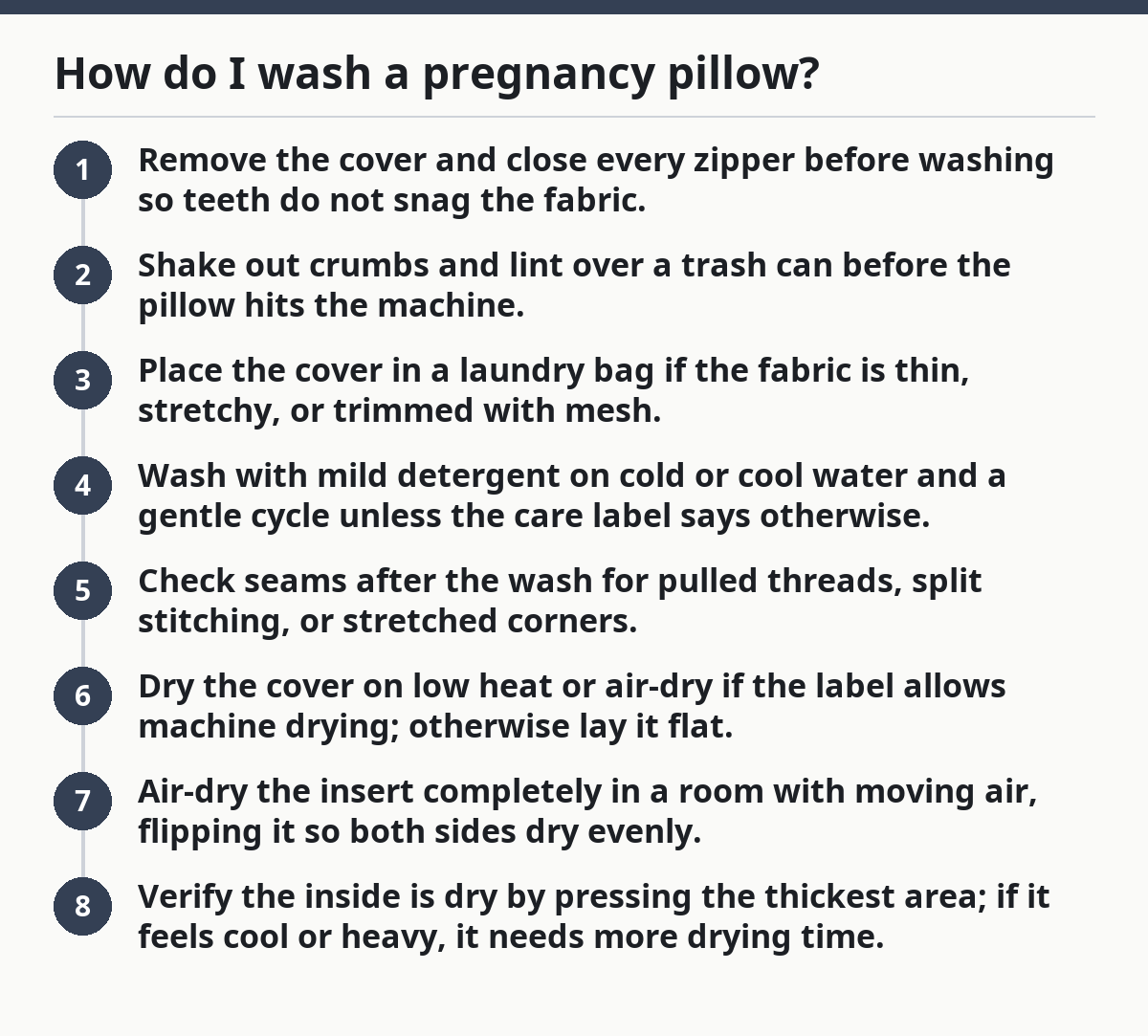
You wash a pregnancy pillow by separating the cover, using a gentle cycle for the washable part, and air-drying the insert until it is fully dry. That order matters because a warm dryer can shrink the cover, crush the fill, or trap dampness inside the pillow core.
Use this method for most pillow-style support gear with removable covers:
- Remove the cover and close every zipper before washing so teeth do not snag the fabric.
- Shake out crumbs and lint over a trash can before the pillow hits the machine.
- Place the cover in a laundry bag if the fabric is thin, stretchy, or trimmed with mesh.
- Wash with mild detergent on cold or cool water and a gentle cycle unless the care label says otherwise.
- Check seams after the wash for pulled threads, split stitching, or stretched corners.
- Dry the cover on low heat or air-dry if the label allows machine drying; otherwise lay it flat.
- Air-dry the insert completely in a room with moving air, flipping it so both sides dry evenly.
- Verify the inside is dry by pressing the thickest area; if it feels cool or heavy, it needs more drying time.
The problem signs are easy to spot. A musty smell, a cold patch in the center, or a cover that shrinks around the insert means the item went back together too soon. That is when mildew and clumping start.
If the pillow is memory foam, do not soak it unless the label clearly says that water is allowed. Memory foam can hold water deep in the core, and that trapped moisture is hard to remove. Consumer Reports also notes that some foam products can take a long time to dry after cleaning.
What is the safest way to clean a wedge pillow?
The safest approach for a wedge pillow is to follow the label, spot-clean the foam or fill, and wash only the removable cover if the label allows it. A wedge has a firmer angle than a regular pillow, so water tends to run into the seams and linger there.
Picture this: you spill lotion, sweat, or breast-milk residue on the sloped side and want it gone fast. Start with a clean cloth, a little water, and a mild detergent mixed lightly, then blot instead of scrubbing. Scrubbing pushes the stain deeper into the fabric and can rough up the cover.
Use this approach:
- Blot the spot with a dry cloth first.
- Apply diluted detergent to the cloth, not straight onto the wedge.
- Blot again until the stain lifts.
- Rinse the cloth and blot away soap residue.
- Let the area dry flat with airflow from a fan if possible.
A wedge usually should not be twisted, wrung, or folded sharply. Those moves can crack foam or change the angle that makes the wedge useful. If the cover has a zipper, wash the cover on its own and keep the foam away from the machine unless the label says otherwise.
Who should skip this method: anyone with a wedge that has glued layers, a foam core with no removable cover, or a care tag that says dry clean only. A removable-cover pillow is the better fit for machine washing. Mayo Clinic advises using the product label and seeking manufacturer guidance when the care instructions are unclear.
Can you clean a mattress topper the same way?
No, you clean a mattress topper more like a large foam surface than a pillow, because it stays on the bed and traps moisture easily. A topper usually needs vacuuming, spot cleaning, and long drying time rather than a full soak.
Start by stripping the bed and vacuuming the topper with a upholstery attachment. That pulls out dust, hair, and skin flakes before they settle into the foam. Then treat spots with a small amount of mild detergent on a damp cloth. Keep the cloth only slightly wet.
Use these guardrails:
- Do not saturate the topper unless the label clearly allows it.
- Do not fold a thick topper unless the manufacturer says it can be rolled.
- Do not put it back on the bed damp, even if the surface feels dry.
- Do not use high heat unless the label allows it.
If the topper has an encasement, wash the encasement on the label’s cycle and clean the foam separately. If the foam has an odor, air it out in a dry room with windows open and a fan nearby. For a foam topper, that drying step is not optional.
This is one of the places where a generic article gets it wrong. A mattress topper is not a pillow insert with a cover. It has more mass, more trapped air, and a much slower dry time.
What mistakes ruin pregnancy pillows and toppers?
The most common mistake is using a hot dryer because it feels faster. Heat can shrink covers, warp foam, and set in odors. Air-dry when the label does not clearly allow heat, and give thick inserts enough time to dry all the way through.
Another mistake is treating a stain with too much water. That pushes liquid into the core, where it can stay hidden for days. A blotting cloth and a small amount of detergent do less damage than a soaked patch.
Common errors and the fix:
- Washing foam by default — this can break down the structure; wash the cover instead.
- Using bleach on colored fabric — this can fade and weaken fibers; use mild detergent.
- Skipping the zipper close — this can snag seams; zip everything shut first.
- Putting damp gear back on the bed — this invites mildew; dry fully before use.
- Using perfume spray to cover odor — this masks a moisture problem; find the wet area and dry it.
A second mistake is ignoring the care tag because the item “looks washable.” That is a bad bet with foam, shredded fill, and layered toppers. The tag is the one place where the maker tells you how the materials were built.
How often should you clean pregnancy bedding products?
You clean pregnancy bedding products on a schedule that matches use, sweat, spills, and dust, not on a fixed rule that fits every home. Covers need more frequent washing than the inserts, and toppers need less washing but more inspection.
A practical schedule looks like this:
- Cover or pillowcase: wash after visible dirt, sweat, or odor shows up.
- Insert or foam core: spot-clean only when needed.
- Mattress topper surface: vacuum and inspect at least when you change bedding.
- After illness, heavy sweating, or a spill: clean sooner rather than later.
The material matters too. Cotton covers can usually handle more frequent washing than delicate knit or stretch covers. Foam and layered fills need slower care because repeated soaking shortens their useful life. If the item is used every night, a washable cover is the workhorse; the fill should get gentler treatment.
The source matters as well. PubMed shows 16,996 human records for the wider pregnancy support topic from 2016–2026, and the 100 most relevant records had a median publication year of 2022; those figures were computed on 2026-11-06 from a PubMed search using pregnancy[Title/Abstract] AND support[Title/Abstract] AND humans[MeSH Terms], sorted by relevance, then read for the broader subject because the exact question had too little published on it. That doesn’t tell you how to wash a pillow, but it does show the topic sits inside a current, active health-adjacent field.
What to do when the usual method does not fit
The usual method does not fit if the item is heavily stained, has a persistent odor after drying, has a torn seam, or contains mixed materials that react differently to water. In those cases, a simple wash can make the problem worse.
Persistent mildew smell: this usually means moisture stayed inside the fill — stop using the item until it is fully dry, and replace it if the smell returns after airing out.
Split seam or open zipper track: this can let fill escape or let water into the core — repair the seam before washing, or limit cleaning to the cover.
Foam that feels heavy for days: trapped water is still inside — do not use heat to rush it, because high heat can damage foam structure.
Cover with peeling coating or cracked surface: the fabric layer is breaking down — wash less often and switch to gentle spot cleaning only.
Label says dry clean only: the maker is warning that water may deform the item — follow the label or contact the manufacturer for the model-specific method.
The best part? You do not need fancy products to keep most pregnancy support gear in good shape. A mild detergent, a laundry bag, a clean cloth, and enough drying time solve most messes. The hard part is patience.
The mistake most people make with odor control
The biggest odor mistake is spraying over a smell instead of removing the moisture that caused it. Air freshener covers a problem for an hour. Drying, vacuuming, and washing the right layer actually change the smell.
For soft fabrics, start with fresh air and a dry room. For foam, let air move around the item on all sides, and turn it so the hidden side dries too. If the odor comes from sweat or body oils on the cover, a normal wash with detergent usually does more than perfume ever will.
If the smell stays after washing and drying, the problem is likely inside the foam or fill. At that point, the cleaner scent is not a sign that the item is safe to keep using. It is a sign that the top layer was cleaned while the inside still holds moisture or residue.
How to keep pregnancy support gear in better shape
You keep pregnancy support gear in better shape by cleaning early, drying slowly, and protecting the washable layer with a cover you can remove often. That reduces stress on the insert, wedge, or topper and makes each wash easier.
A simple routine works best:
- Use a pillow protector or cover so most skin oils stay on the outer layer.
- Vacuum the bed area when you change sheets to cut dust buildup.
- Rotate the item if the shape allows it so one side does not take all the pressure.
- Store it dry and uncompressed when not in use.
- Recheck seams and zippers after every wash.
If you are caring for a pillow, wedge, or topper during pregnancy, the goal is not perfection. It is clean, dry, and still supportive. If the item loses its shape, holds odor, or stays damp, it has stopped doing its main job.
How do I wash a pregnancy pillow?
Wash the removable cover if the care label allows it, and spot-clean or air-dry the insert unless the label clearly says the whole pillow can be washed. Use mild detergent, cool water, and a gentle cycle for the cover. If the pillow is foam or memory foam, avoid soaking it unless the maker says that is safe.
How often should I clean pregnancy bedding products?
Clean them as soon as they pick up sweat, spills, stains, or odor, and check them during regular sheet changes. Covers usually need washing more often than inserts or foam pieces. Mattress toppers need vacuuming and spot cleaning more often than full washing.
Can I put a pregnancy pillow in the washing machine?
Only if the care label says it can go in the machine. Many removable covers can, but foam inserts and structured pillows often cannot. If the pillow has memory foam, glued layers, or a sewn-in shape, machine washing is usually not appropriate.
Drafted with AI; not yet reviewed by a person.
