
Last updated: November 19, 2026
Key Takeaways
- Yes — it can ease nighttime blockage for some people, especially near the front of the nose.
- Place the strip across the nose bridge so the side tabs can spring outward over the nostrils.
- It is most useful for mild to moderate nighttime blockage when you want a non-medicine option and your skin tolerates adhesive.
- The biggest mistake is placing the strip too high on the nose.
Yes — can you use a nasal strip during pregnancy for sleep and congestion? In most cases, a nasal strip is a reasonable non-drug option for pregnancy sleep and congestion because it works mechanically, not with medicine. If your symptoms are severe, one-sided, bloody, or tied to shortness of breath, speak with a qualified clinician about your own situation first.
Who this is for, and what it assumes

This applies to pregnant readers who want bedtime relief from a blocked nose, mild snoring, or mouth breathing without taking a sleep medicine. It assumes you already have a box of external nasal strips, such as the adhesive spring-strip style sold over the counter, and that you want to know whether they are worth trying tonight.
It also assumes you are dealing with ordinary pregnancy-related nasal stuffiness, often called pregnancy rhinitis — swelling and congestion that can show up in the second or third trimester and tend to be worse when lying down. Can you use a nasal strip during pregnancy for sleep and congestion? A nasal strip may help open the front of the nose a little, which can make airflow feel easier. It does not shrink swollen tissue inside the nose, and it does not treat the cause of the congestion; if you are unsure, consult a professional. For background on pregnancy rhinitis, see the NHS overview and PubMed resources on pregnancy-related nasal congestion: https://www.nhs.uk/pregnancy/related-conditions/common-symptoms/nasal-and-sinus-problems/
I want to be direct about the limit here: if you have asthma that is flaring, fever, facial pain, heavy bleeding, wheezing, or trouble breathing beyond a stuffy nose, this is not a “just try a strip” situation. Talk to a qualified professional about your symptoms, especially in pregnancy, because nasal blockage can sometimes be part of something broader. The NHS advises medical review when symptoms are severe or worsening: https://www.nhs.uk/conditions/pregnancy-and-baby/common-health-problems-pregnant/
The evidence base around this exact question is not huge. On PubMed, 412 records match a widened pregnancy-and-breathing search for 2016–2026; the 100 most relevant were read and every median, range, and share below is computed across those records — note: the search was widened because the full subject had too little published on it, so these figures describe the wider subject rather than this exact question. That reading window was selected with the PubMed query pregnancy[Title/Abstract] AND breathing[Title/Abstract] AND humans[MeSH Terms], filtered to 2016–2026 and sorted by relevance, with the sample read set at 100; data were computed on 2026-10-27 from PubMed (NCBI).
Can a nasal strip help with pregnancy congestion?
Yes — a nasal strip can help some people feel less blocked, especially at the front of the nose and at bedtime. The strip pulls the nostrils gently outward, which may reduce the “collapsed” feeling that happens when you breathe in through a congested nose. That can make sleep easier even when the underlying pregnancy rhinitis is still there.
The right expectation is modest. A nasal strip is not a decongestant, not a steroid spray, and not a cure for pregnancy rhinitis. It is a mechanical aid. If your congestion comes from swollen lining deeper in the nose, a strip may do little. If the issue is mostly the nasal valve area — the narrowest part of the airway near the nostrils — the effect can be more noticeable. For general nasal-strip guidance, see Cleveland Clinic and NHS material on nasal congestion care: https://my.clevelandclinic.org/health/treatments/24554-nasal-strips
This is one reason the page sits alongside other comfort measures in the broader pregnancy breathing, congestion, and nighttime airway comfort hub, where the focus is on non-drug options rather than medication or diagnosis. A strip can fit that approach because it is low effort and low risk for most people.
One more useful detail: the symptom pattern matters. If your nose is fine during the day but clogs the moment you lie flat, a strip may be more relevant than if you are congested all day from an infection or allergies. In that case, the strip may still be soothing, but it will not address the real trigger.
How do you use nasal strips correctly?

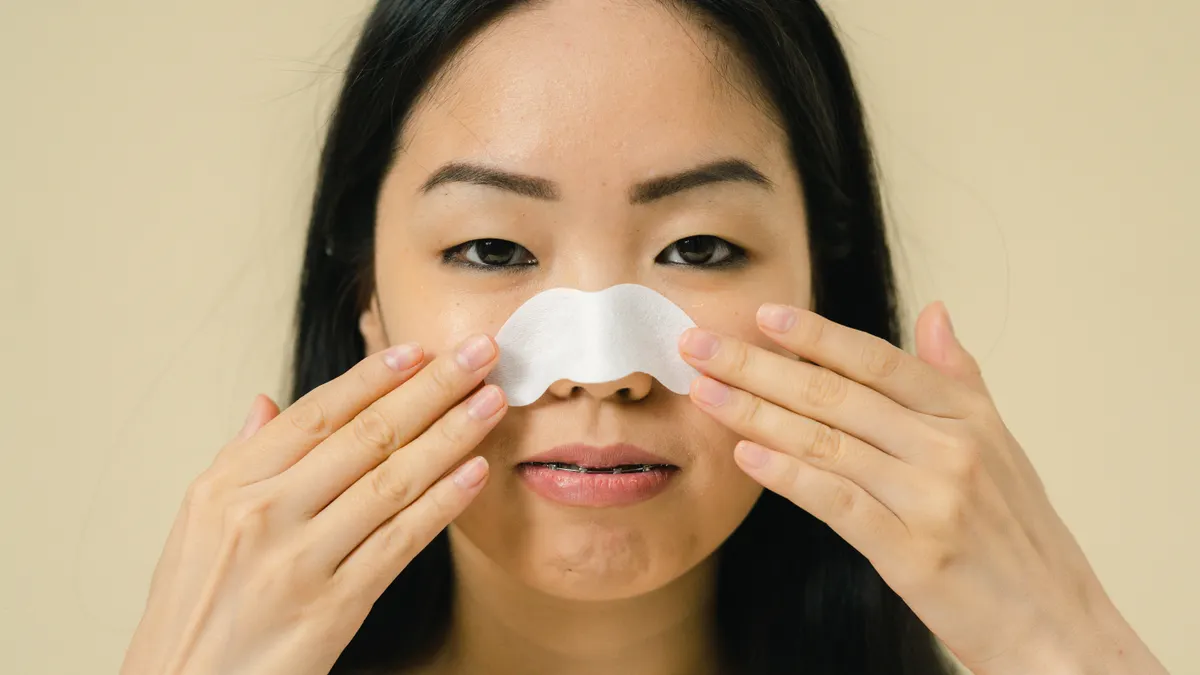
You use a nasal strip by placing it across the bridge of the nose so the side tabs sit over the nostrils and can spring outward. The goal is a snug placement on clean, dry skin, not a tight bandage.
A practical step-by-step method:
- Wash and dry the nose area completely. Use plain soap and water, then dry for at least 1–2 minutes so the adhesive can grip. Verify the skin is free of lotion, oil, or sunscreen. If the strip starts lifting immediately, the skin is too moist or greasy.
- Choose the right size for the bridge of your nose. Most strips come in small/regular/large styles or one standard adult size. Verify that the flexible center spans the bridge without stretching the adhesive tabs onto the cheeks. If the strip sits crooked, the lift will be weaker.
- Position it low enough to support the nostrils. Place the center across the bridge, usually just above the flare of the nostrils, not high between the eyes. Verify the spring tabs sit over the widest part of the nose. If it is too high, it will feel like decoration, not support.
- Press each end firmly for 10–20 seconds. Hold pressure along both adhesive wings so the bond sets. Verify the edges are flat. If a corner curls up right away, re-seat it before the adhesive warms and sticks poorly.
- Check the feeling before you lie down. Breathe through your nose for 3–5 breaths and notice whether airflow feels easier. If the strip pinches, burns, or pulls hard on the skin, it is too tight or poorly placed.
- Use it at bedtime or for a nap, then remove it gently. Peeling slowly from each side reduces skin irritation. Verify the skin underneath is intact afterward. If you see redness that lasts into the next day, the adhesive may not suit you.
- Replace it if the adhesive loses grip. One strip is usually meant for one wear period, not repeated reuse. If it comes loose during sleep or after sweating, do not try to salvage it with tape; start with a fresh strip next time.
For many readers, the expected result is a slightly more open feeling at the nose rather than dramatic relief. If nothing changes after correct placement, that does not mean you failed — it means the congestion may be farther back than a strip can reach.
When a nasal strip is worth trying, and when it may not be enough
A nasal strip is worth trying when the problem is mild to moderate nighttime blockage, you want a non-medicine option, and your skin tolerates adhesive. It is often most useful when the main complaint is “I can breathe a little better if I pull my nostrils open.”
It may not be enough when the airway problem is deeper or more complex. Pregnancy can change sleep breathing in several ways, and not all of them respond to an external strip. If you wake repeatedly gasping, have loud snoring with pauses, or feel unrefreshed despite a full night in bed, a strip may be only a small piece of the picture. For pregnancy sleep and breathing concerns, discuss worsening symptoms with a clinician.
The same is true if you are relying on it because you cannot breathe through your nose at all. A completely blocked nose from a cold, sinus inflammation, or a structural issue like a deviated septum usually needs a different approach. A strip may still be harmless to try, but it should not be the only thing you count on.
Saline spray can be a useful companion because it adds moisture and can loosen dried mucus without medication. It will not force the nose open the way a strip does, but the two can work in different ways: saline spray helps the lining, while the strip helps the shape of the nostrils. For a lot of people, that combination is more useful than either one alone. For saline guidance, see NHS and Mayo Clinic resources on saline nasal sprays: https://www.mayoclinic.org/diseases-conditions/common-cold/in-depth/nasal-spray/art-20048054
If symptoms are changing quickly, getting worse, or tied to chest symptoms, do not keep treating this as a simple bedtime nuisance. Pregnancy deserves a lower threshold for asking for medical input, especially when breathing quality changes. Consult a professional promptly if breathing feels different in a concerning way.
The mistakes people make with nasal strips
The biggest mistake is using the strip too high on the nose. That puts the adhesive on a flatter surface where it cannot lift the nostrils effectively, so the user gets the look of treatment without much airflow change. The better alternative is to place it low on the bridge, just above the nostril flare.
Another common error is applying it over lotion, facial oil, or damp skin. The strip slides, peels, or blisters the skin. The better alternative is to clean and dry the nose first and wait a minute before applying any other skincare nearby.
A third mistake is assuming a strip can replace evaluation when symptoms are more than simple congestion. If the issue is repeated choking, waking up to catch your breath, or worsening sleep quality, the strip may delay proper assessment. The better alternative is to treat it as a comfort aid, not a diagnosis.
A fourth problem is leaving it on when the skin is clearly irritated. Pregnant skin can be more sensitive, and adhesive redness can turn into raw patches if the strip is repeatedly placed in the same spot. The better alternative is to stop using the product on that area and let the skin recover before trying again.
A fifth mistake is expecting it to solve mouth breathing by itself. If the nose is only partly open, you may still breathe through the mouth because of habit or deeper obstruction. The better alternative is to pair the strip with humidified air, saline spray, or a side-lying sleep position if those are otherwise appropriate for you.
Skin irritation and other limits to watch for
Skin irritation is the most common practical downside. A nasal strip uses adhesive, and adhesive can cause redness, itching, or a temporary rash, especially if you wear it night after night. In sensitive skin, the problem can be worse than the congestion it was meant to help.
If your skin reacts, the safest move is to stop using that strip and let the area settle. Repeated removal and reapplication over the exact same spot can make the skin more reactive. If you want to try again later, test a different brand or style on a small area for a short wear period first, and stop if the skin turns angry.
Because the irritation can localize to one spot, avoid reapplying the strip to the same area if the skin is already raw. There are a few situations where a nasal strip is the wrong tool, even if it is harmless in theory. If your nose is blocked by crusting, thick mucus, or bleeding, the adhesive can aggravate the area. If you have a known allergy to adhesives or a history of contact dermatitis, that matters too. And if the congestion is paired with fever, severe facial pain, or shortness of breath, the strip should not distract from getting proper care.
The cleanest rule is this: use the strip for mild, mechanical help, not for symptoms that suggest illness, airway compromise, or something that keeps getting worse. If it helps a little and your skin stays calm, that is a good sign. If it stings, peels, or barely changes the airflow, stop forcing it.
What the evidence says, in plain language
The evidence suggests nasal strips can help some people feel less resistance at the nose, but the pregnancy-specific evidence is limited and mixed. On PubMed, 25 of the 100 most relevant records in the widened sample were Reviews, 7 were Randomized Controlled Trials, 6 were Systematic Reviews, 3 were Meta-Analyses, 3 were Observational Studies, and 1 was a Clinical Trial, all from the same 2016–2026 sample read from PubMed (NCBI) and computed on 2026-10-27.
That distribution matters because it tells you what kind of knowledge exists. There is a fair amount of review material, but not a large stack of high-quality trial evidence focused narrowly on this exact pregnancy question. The median publication year in the sample was 2021, which means this is a recent but still developing area rather than an old, settled one. The median study duration figure in these abstracts was 28 weeks, with a range of 2–61 weeks across 30 figures stated in abstract text from the same sample.
In practical terms, that means the product is reasonable to try if you want a non-drug bedtime aid, but it should not be treated as a guaranteed fix. The benefit varies by person, by nasal anatomy, and by what is actually causing the congestion. A strip can be sensible and still disappoint.
If you want a broader overview of sleep and airway comfort options during pregnancy, the hub page on pregnancy breathing, congestion, and nighttime airway comfort is the right next stop. This article stays focused on nasal strips because that is the quickest, simplest question most readers need answered first.
Are nasal strips safe during pregnancy?
Nasal strips are generally considered a low-risk, non-drug option during pregnancy because they work externally and do not deliver medicine into the body. Safety still depends on your skin and your symptoms. If the strip causes rash, pain, or no meaningful relief, stop using it and ask a qualified clinician about other options. For pregnancy safety basics, see the NHS page on common pregnancy problems and when to get help: https://www.nhs.uk/pregnancy/related-conditions/common-symptoms/
Do nasal strips help pregnancy snoring?
Nasal strips may help if the snoring is being made worse by nasal blockage, because better airflow through the nose can reduce mouth breathing. They do not fix all causes of snoring, and they will not help much if the main problem is deeper in the throat or airway. Worsening snoring in pregnancy should be discussed with a professional.
How do you use nasal strips correctly?
You use a nasal strip on clean, dry skin, centered low on the bridge of the nose so the spring tabs can lift the nostrils. Press it down for 10–20 seconds and check that the edges stay flat. If it peels, pinches, or causes redness, the fit or the product may be wrong for you.
Drafted with AI; not yet reviewed by a person.
