

Last updated: November 19, 2026
Quick answer: For pregnancy congestion, a humidifier is usually better for dry air, and a saline rinse is usually better for a blocked, mucus-filled nose. If you have bleeding, fever, severe sinus pain, or trouble breathing, consult a qualified clinician rather than relying on either tool.
A humidifier helps when dry air makes your nose feel raw, while a saline rinse helps when mucus and swelling are making you feel blocked. In the topic Humidifier or saline rinse for pregnancy congestion: which helps which symptom?, those two tools solve different problems, and the safer choice depends on which symptom is louder. For your own situation, speak with a qualified clinician if you have bleeding, fever, severe sinus pain, or trouble breathing.
Key takeaways
- Dry, heated air usually points to a humidifier; a thick, stuffed-up nose usually points to a saline rinse.
- A humidifier changes the room environment. A saline rinse changes what is sitting inside the nose.
- Neither one is a cure for pregnancy congestion, and neither one works the same way for every person; ask a professional if symptoms are severe or unclear.
- The biggest safety issue with humidifiers is cleanliness and water choice; the biggest safety issue with rinses is using clean water and a clean device. See the CDC and FDA guidance.
- If the congestion is one-sided, painful, bloody, or making breathing hard, the tool choice matters less than getting checked.
I write about breathing, congestion, and sleep comfort in pregnancy because small airway problems can become big nighttime problems fast. This page is the practical fork in the road: humidifier or saline rinse, and which symptom each one is better at calming.
The short answer: humidifier for dry air, saline rinse for a stuffed nose
A humidifier usually fits dryness, while a saline rinse usually fits blockage. That is the cleanest way to think about it. If your nose feels parched, your throat is scratchy, and the bedroom air feels desert-dry, adding air moisture can make the lining of the nose feel less irritated. If the problem is nasal congestion—pressure, thick mucus, and the sense that nothing can move through the nose—saline is the more direct tool because it reaches the nasal passages themselves.
That difference matters in pregnancy because not every “stuffy nose” feels the same. Some people mostly feel dryness and burning. Others feel swollen, full, and trapped, especially at night. A humidifier works on the room, so it can help the environment feel less harsh. A saline rinse works on the nose, so it can loosen and wash out mucus. Those are different jobs.
The catch is that neither tool should be oversold. Research on pregnancy and breathing-related symptoms is broad rather than tightly focused on this exact comparison, so the advice here stays symptom-based rather than promising a cure. The safest takeaway is simple: match the tool to the symptom.
Humidifier: the better pick when dry air is the problem

A humidifier wins when the room itself is part of the problem. Dry heated air can make the nose feel tighter, the throat feel scratchier, and sleep feel less comfortable even when the actual swelling in the nose is modest. In that situation, changing the air moisture can help the whole upper airway feel less irritated.
A humidifier is also the better match when you wake up with a dry mouth, a scratchy throat, or crusty nasal passages. Those are signs that the environment may be too dry for comfort. In a bedroom, the point is not to create a tropical room; it is to reduce dryness enough that the nose does not feel inflamed by the air itself.
The downside is that a humidifier is indirect. It does not clear mucus out of the nose, and it cannot open a swollen passage by itself. If the main complaint is a blocked nose with pressure and mucus, a humidifier may feel pleasant but incomplete. It also needs careful maintenance. Stagnant water, dirty tanks, and visible buildup are not small issues, because a device that adds moisture should not also spread particles or odors into the room. Use distilled water if the manufacturer recommends it, and follow the cleaning directions exactly.
This option is not ideal for someone who wants immediate nasal clearing. It is also not the first pick if the room is already humid or if the nose is blocked but not dry. For those people, a humidifier can be the wrong tool for the job, even if it sounds soothing.
Saline rinse: the better pick when mucus and blockage are the problem
A saline rinse wins when the nose feels packed, swollen, or full of mucus. It is the more direct option because it goes into the nasal passages and physically helps wash out what is sitting there. That makes it especially useful for the kind of congestion that feels mechanical: tight passages, postnasal drip, and the sensation that breathing is being blocked from the inside.
Saline also has a practical advantage for nighttime comfort. If congestion is strongest when you lie down, a rinse can be a more targeted way to reduce the feeling of blockage before bed. It does not change the air in the whole room. It changes the nose itself, which is why it often feels more “obvious” than a humidifier when the problem is a stuffy nose rather than dry air.
The limitation is just as important. A saline rinse can feel awkward, and some people do not tolerate the sensation well. If the nose is very raw, the first few tries may sting or feel irritating. The device also needs proper cleaning, and the water must be safe for nasal use. That means clean, appropriately prepared water and a clean rinse device; contamination is the danger here, not the salt itself. The FDA advises using sterile, distilled, or previously boiled water for nasal rinses.
Saline is not the better choice when the main issue is dry bedroom air without much mucus. It can still be used in some cases, but it is solving a different problem than a humidifier. If the symptom is dryness, a rinse can be the long way around.
Humidifier or saline rinse for pregnancy congestion: which helps which symptom?

A humidifier helps dry-air symptoms; a saline rinse helps blockage symptoms. That is the simplest and most useful split.
| Criteria | Humidifier | Saline rinse | Winner for which condition |
|---|---|---|---|
| Main target | Room air moisture | Nasal passages and mucus | Humidifier for dry air; saline for stuffed nose |
| Best symptom match | Dry nose, scratchy throat, dry bedroom air | Thick mucus, blockage, pressure, postnasal drip | Depends on the symptom |
| Speed of felt relief | Often gradual | Often more immediate | Saline rinse when quick clearing matters |
| Nighttime comfort | Helps the room feel less harsh through the night | Helps before bed if the nose is clogged | Humidifier for dryness; saline for blockage |
| Maintenance burden | Tank cleaning and water choice matter | Device cleaning and water safety matter | Neither is maintenance-free |
| Risk if neglected | Mineral buildup, stale water, unwanted residue | Contamination from poor cleaning or unsafe water | Both, but in different ways |
| When it can miss the mark | When mucus is the real problem | When dry air is the real problem | Use the tool that matches the symptom |
| Pregnancy use case | Best when the nose feels irritated by dry indoor air | Best when pregnancy congestion feels swollen and blocked | No universal winner |
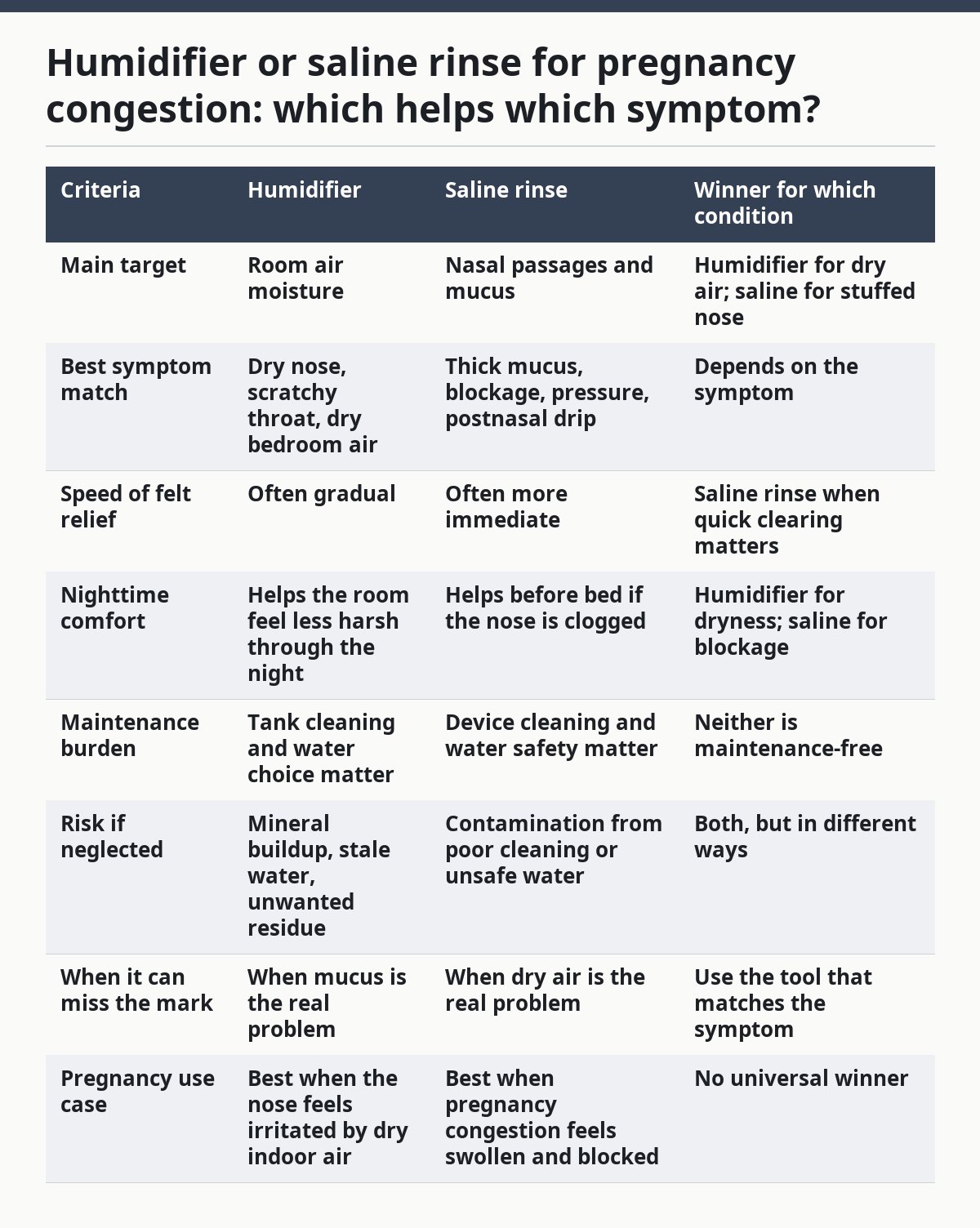
The table tells the real story: these are not competing versions of the same thing. They overlap in the broad goal of comfort, but they do different work. If you choose the wrong one, you may still feel miserable and assume the tool “didn’t work,” when the real issue was that it was aimed at the wrong symptom.
What makes a humidifier the wrong choice?
A humidifier is the wrong choice when the room is not dry enough to matter or when the nose feels blocked rather than parched. In those situations, adding moisture may barely change the symptom you care about. It may make the room feel softer, but it will not necessarily make breathing easier.
It is also the wrong choice when maintenance is likely to be skipped. A humidifier that is not cleaned can become a nuisance instead of a comfort tool. The practical rule is simple: if you will not keep up with tank care, it is not a great bet. A clean device matters more than a fancy feature set, because the goal is air moisture, not a damp corner of the bedroom.
This is the option for someone who says, “My nose and throat feel dry all night,” not “My nose is stuffed shut.” It is less helpful for the person who wakes with a mouth breathing problem that is actually driven by nasal swelling. The difference is easy to miss because both can feel like “congestion,” but they are not the same complaint.
A humidifier is also less compelling if the room already feels humid. More moisture is not automatically better. In a bedroom that already feels damp, a humidifier can make things uncomfortable rather than easier.
What makes a saline rinse the wrong choice?
A saline rinse is the wrong choice when the main complaint is dryness without much mucus. In that case, the rinse may feel unnecessary or irritating, because the symptom is not “stuff in the nose” so much as “the nose feels dry and angry.” A humidifier is the cleaner fit there.
It is also the wrong choice if the water and device care are not realistic. A saline rinse is only as sensible as the hygiene behind it. If the device is left unclean, or if the water is not appropriate for nasal use, the risk shifts from comfort to trouble. That is why safety and maintenance belong in the decision, not on the side.
The other drawback is comfort. Some people dislike the feeling of fluid in the nose, especially when they are already tired or nauseated in pregnancy. If the idea of rinsing makes you tense, you may never stick with it long enough for it to be useful. A tool that gets used twice is not a useful tool.
This is not the first pick for someone whose congestion is mostly a dry, irritated nose at bedtime. It is better when the nose is visibly or noticeably clogged and the goal is to clear it, not merely soothe it.
Which one should you choose tonight?
Choose a humidifier if your nose feels dry, your throat feels scratchy, and the room air feels harsh. Choose a saline rinse if the bigger problem is mucus, blockage, or the feeling that your nose is physically stuffed. Neither if you have heavy bleeding, severe facial pain, fever, or trouble breathing, because those need a clinician’s attention rather than a home fix.
That verdict is intentionally narrow. It gives you a choice based on the symptom, not on the marketing language around the device. The humidifier changes the environment. The saline rinse changes the nasal passages. If you can name which one is bothering you more, the answer gets simpler.
A few real-world details can flip the decision. If the bedroom is dry and you also have a mildly stuffy nose, a humidifier may be enough. If the nose is blocked and you want a direct, one-time reset before sleep, a saline rinse usually makes more sense. If you are managing both dry air and mucus, using both in a sensible way can be reasonable, but only if safety and cleaning are handled carefully.
For broader context on breathing comfort in pregnancy, the hub on pregnancy breathing, congestion, and nighttime airway comfort is the next place to go. This page stays on the narrower question: which tool fits which symptom?
When should the choice change entirely?
The choice changes entirely when the symptom pattern stops looking like ordinary congestion. If the congestion is one-sided, severe, foul-smelling, or comes with fever, the issue may not be simple pregnancy-related stuffiness. If there is significant bleeding or facial pain, a home humidity or saline plan is not the whole answer.
The choice also changes if the main problem is not congestion at all but sleep disruption from another cause. A humidifier or saline rinse can be a comfort tool, not a solution to every nighttime breathing complaint. That distinction matters because it keeps the decision honest. A tool should match a symptom, not a hope.
A third exception is sensitive nasal tissue. If rinsing stings badly or makes the nose feel worse, a humidifier may be the more tolerable first step. If a humidifier seems to make the room feel damp or unpleasant, saline may be the better route. Comfort is part of the outcome here, not an afterthought.
The last exception is simple: if you are unsure what is causing the congestion, ask a qualified professional rather than guessing. Pregnancy changes can blur the line between dryness, swelling, allergy-like symptoms, and something that deserves a closer look.
Is a humidifier safe during pregnancy?
A humidifier is generally considered a common comfort tool during pregnancy, but safety depends on cleaning and water choice. The main concern is not pregnancy itself; it is keeping the device clean and using it as directed. If the room already feels humid or the device is hard to maintain, a clinician can help you judge whether it is worth using. The CDC recommends regular cleaning to reduce mold and bacteria.
Drafted with AI; not yet reviewed by a person.
