
Last updated: November 29, 2026
Quick answer: if one sleep fix helps only part of the night, pregnancy sleep symptoms may be coming from more than one cause. When sleep gets worse in more than one way — for example, waking to pee, then lying awake with reflux or a racing mind — a qualified professional can help sort out what is overlapping and what is separate. This guide on how to tell if pregnancy sleep symptoms point to more than one cause focuses on the pattern, not just one complaint.
Key takeaways
- Night waking in pregnancy can come from several causes at once, not just one bad habit or one symptom.
- The pattern matters more than any single complaint: reflux, congestion, bladder pressure, insomnia, anxiety, and anemia can stack up.
- Tracking three details for about 7 nights can make the pattern clearer: what woke you, what time it happened, and what happened next.
- Fixing the wrong cause can waste time, especially if the main driver is not the one that feels loudest.
- If symptoms are severe, sudden, or mixed with other medical concerns, a clinician should sort out the cause instead of guessing.
What counts as more than one cause?
More than one cause means two or more pregnancy-related factors are acting on sleep at the same time. That can happen when insomnia sits on top of reflux, congestion, bladder pressure, anxiety, or anemia, and each one changes the night in a different way. The point is not to label every bad night; it is to notice when the pattern does not fit a single explanation.
A generic sleep problem usually has one main shape. Mixed-cause sleep symptoms often have a chain: the body wakes first, then the mind stays awake, or the mind is tense first and the body joins in later. That matters because pregnancy insomnia is common, and the causes can change as pregnancy changes. According to Cleveland Clinic, pregnancy hormones and increased fetal weight can keep a person awake, and insomnia symptoms are commonly reported in about 1 in 4 women in early pregnancy and up to 80% by the end of the third trimester.
Symptoms of pregnancy often begin around 4 to 6 weeks, according to the NHS, so sleep trouble can show up early and then shift later. That is one reason a single explanation can be wrong by the time the problem feels serious. A person who starts with nausea and then later adds reflux, congestion, or bladder pressure is no longer dealing with the same sleep picture.
How do mixed symptoms usually show up?
Mixed symptoms usually show up as repeated night waking with a different trigger each time. A person may wake at 2 a.m. from bladder pressure, then stay awake because of reflux, then nap badly the next day because sleep was broken. Another person may first blame insomnia, when the real pattern is a stuffy nose plus shortness of breath plus worry about getting enough rest.
That overlap is exactly why symptom pattern matching helps. One cause tends to be steady: the same discomfort, around the same time, with the same result. Several causes are messier. They change the type of discomfort, the timing, and what happens after waking.
| Pattern | What it can suggest | What makes it more likely |
|---|---|---|
| Waking once or twice with a clear physical trigger | Bladder pressure or reflux | The trigger is the same most nights |
| Falling asleep late, then waking with a busy mind | Anxiety or insomnia | The wake-up is not tied to one body symptom |
| Waking with blocked nose, mouth breathing, or shortness of breath | Congestion | Symptoms feel worse when lying flat |
| Tiredness that does not match the amount of sleep lost | Anemia or another medical issue | Sleep loss alone does not explain the fatigue |
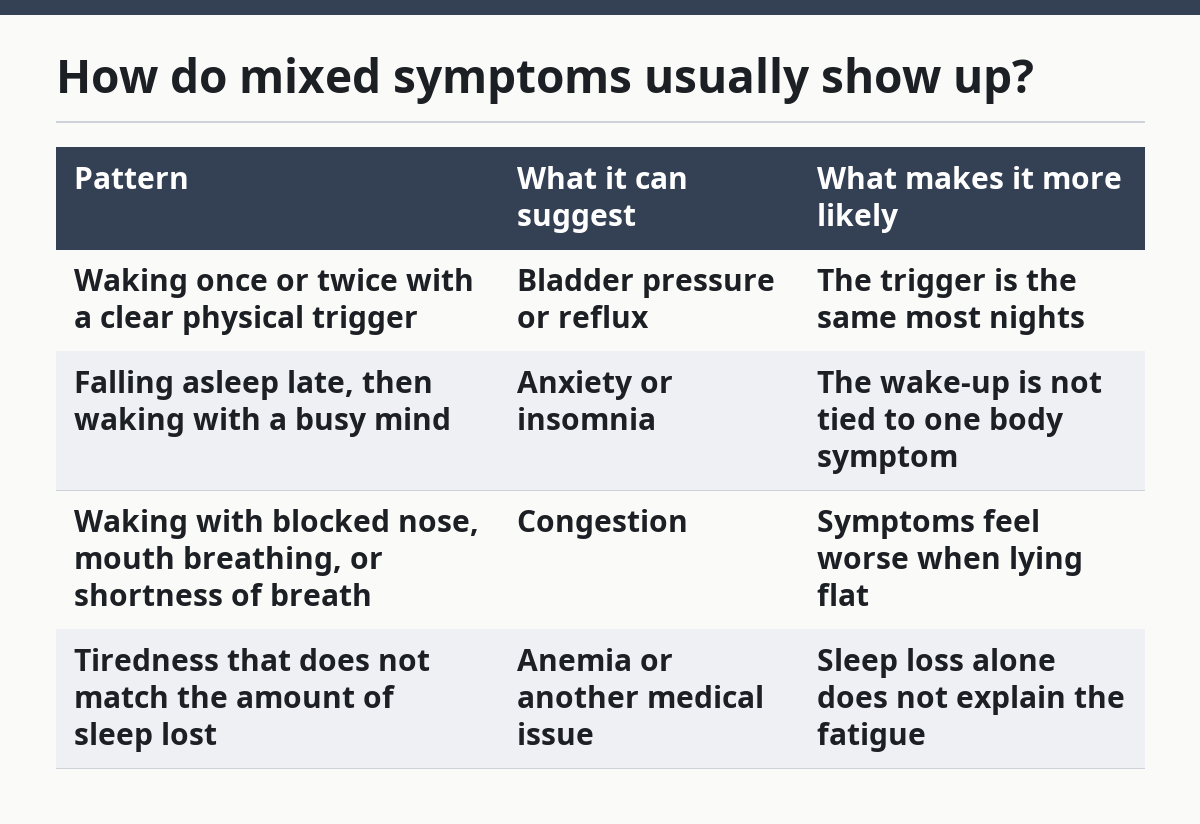
This table is a guide, not a diagnosis. The same person can have one pattern one week and a different one the next, especially in the second and third trimesters. Cleveland Clinic notes that weight gain, a stuffy nose, and shortness of breath can intensify symptoms, which is why the picture can change over time.
How to tell if pregnancy sleep symptoms point to more than one cause
The clearest sign is that one fix helps only part of the problem. If a snack before bed reduces reflux but sleep still breaks apart from congestion or bladder pressure, the sleep issue is mixed, not single-cause. The same is true if the body feels calmer but the mind still stays alert for 1 to 2 hours after waking.
A short symptom check can help separate the pieces. Use 7 nights if possible, because one bad night can mislead. Write down the time of waking, the first symptom noticed, whether it was physical or mental, and what happened next. That is enough to spot patterns without turning bedtime into a project.
- Write down the first wake-up of the night. Use the clock time and the trigger, such as reflux, bathroom urge, stuffed nose, racing thoughts, or leg discomfort. Verify whether the first trigger is the same on most nights. If the first trigger changes, more than one cause is likely.
- Mark whether the problem starts before sleep or after waking. Falling asleep slowly points more toward insomnia or anxiety, while waking with a body symptom points more toward reflux, congestion, or bladder pressure. If both happen, note both.
- Track what worsens after lying down for 10 to 20 minutes. Reflux and congestion often feel different once flat. If symptoms reliably worsen after lying down, the body position may be part of the pattern, not just the clock.
- Note how many times the bathroom breaks sleep. A single wake-up can be normal; repeated wake-ups with other symptoms point to overlap. If bladder pressure is paired with another trigger, do not treat it as the only cause.
- Record daytime fallout the next day. Tiredness, headache, irritability, poor focus, or short naps can show that the night problem is bigger than one brief wake-up. If daytime fatigue is strong, look for a second cause.
- Check for a symptom that keeps returning even when one trigger improves. For example, reflux may settle but sleep stays poor. That means another issue is still active.
- Bring the pattern to a qualified professional if it is unclear. Mixed symptoms often need a broader check because pregnancy sleep problems can cluster with anemia, congestion, anxiety, and other issues. If the pattern is hard to explain in one sentence, it is probably worth a fuller review.
Which causes commonly overlap?
The causes that most often overlap are the ones that affect both body comfort and sleep timing. Insomnia can sit beside reflux, congestion, bladder pressure, anxiety, and anemia, and each one can make the others feel worse. Pregnancy changes can also intensify the whole group at once, especially later in pregnancy.
Here is the practical difference: one cause changes one part of sleep, while several causes alter the whole night. Reflux may make the throat burn when lying flat. Congestion may make breathing noisy or shallow. Bladder pressure may force repeated trips to the bathroom. Anxiety may keep the mind on alert after a normal wake-up. Anemia may make the tiredness feel out of proportion to the hours slept.
Cleveland Clinic notes that many insomnia medicines have not been tested for safety in pregnant women, which is one reason guessing at the main cause can be frustrating. If the wrong symptom gets treated first, the person may still need to consult a professional about the other problem. That is a real trade-off: a single-symptom fix can be useful, but only when the dominant cause is actually the one being addressed.
When should a sleep pattern be reviewed instead of guessed at?
A sleep pattern should be reviewed instead of guessed at when the symptoms do not fit one simple story. If the night wake-ups are changing, stacking up, or getting stronger over time, the safest move is to stop treating it like a single annoyance. Pregnancy sleep symptoms can have more than one cause, and the wrong fix can hide the real one.
Symptoms began in the first trimester and then changed shape later: The cause may have shifted as pregnancy changed — bring the full timeline to a qualified professional. A symptom that started around 4 to 6 weeks and then evolved is not the same problem forever.
One fix helps only briefly: That often means one cause was real but incomplete — keep the clue, but do not stop there. If reflux care helps for one night and sleep still breaks apart, another trigger is still active.
Wake-ups happen for different reasons on different nights: That pattern usually points to overlap — track each trigger for about 7 nights and compare them. If the wake-up is never the same twice, one cause is unlikely to explain everything.
Fatigue feels stronger than the sleep loss should explain: That can suggest anemia or another medical factor — ask for a fuller check rather than assuming it is “just pregnancy.” When tiredness is out of proportion, the sleep issue may not be the whole problem.
Symptoms are making it hard to function in the day: That means the night problem is no longer minor — speak with a qualified professional about the pattern. If daytime focus, mood, or basic tasks are slipping, the sleep issue has crossed into a broader health problem.
What mistakes make this harder to figure out?
The loudest symptom is often the one people treat first, but that can send attention to reflux, for example, while congestion or bladder pressure keeps the night broken. The result is wasted effort and a false sense that nothing works.
A second mistake is tracking only bad nights. That hides the pattern because one rough night may be a fluke, while three similar nights reveal the cause. A third is changing too many things at once, which makes it impossible to tell what helped. A fourth is assuming every sleep problem is insomnia, even when the body is clearly giving other signals.
Another mistake is waiting until the symptoms are severe before asking for help. In pregnancy, that delay matters because symptoms often build as the weeks go on. Cleveland Clinic says insomnia symptoms are commonly reported by up to 80% of women by the end of the third trimester, so a small problem can become a large one if the causes are not separated early.
The better move is to keep the pattern simple: one line for the trigger, one line for the time, one line for the result. That gives a useful record without turning the night into a data project.
How does this fit with the bigger pregnancy sleep picture?
This page fits into the larger pregnancy sleep safety and problem solving guide by sorting overlap, not by naming every cause. The goal is to help a reader notice when the problem is mixed and when it needs a broader check. The related hub covers the wider safety picture; this page focuses on the decision point where one explanation no longer fits.
The broader evidence base is still active, so readers should expect a mix of reviews, trials, and other study types rather than one settled answer. That is why advice here should stay careful: the topic is active, but the symptom pattern still has to be read person by person.
How do i know whether my sleep issue is one cause or several?
It is usually one cause if the same symptom shows up in the same way most nights. It is more likely several causes if the trigger changes, the sleep problem shifts over time, or fixing one issue only helps part of the night. A 7-night symptom log often makes the difference easier to see.
What symptoms often happen together in pregnancy?
Reflux, congestion, bladder pressure, anxiety, insomnia, and anemia can overlap. One person may wake to pee and then stay awake because of heartburn, while another wakes with a stuffy nose and then cannot fall back asleep. The combination matters more than any single symptom.
When should i stop trying home fixes and call my doctor?
Stop guessing when the pattern is changing, severe, or hard to explain in one sentence. A qualified professional should review symptoms that keep returning, spread across the night, or leave daytime fatigue out of proportion to the sleep loss. If the problem is clearly more than one cause, home fixes alone may miss part of it.
Sources
- Cleveland Clinic, Pregnancy Insomnia: Causes, Diagnosis & Treatment
- NHS, Signs and symptoms that might mean you’re pregnant – NHS
- PubMed (NCBI)
- ClinicalTrials.gov
Drafted with AI; not yet reviewed by a person.
