
Last updated: November 19, 2026
Quick answer: in pregnancy, night swelling can be normal, but swelling that worsens sleep can also point to fluid retention or a circulation problem that needs a clinician’s eye.
Key Takeaways
- The pattern, side, and extra symptoms usually tell the story.
- Five checks can sort the problem without guessing.
- The aim is comfort, not a home cure, and pregnancy needs a lower threshold for review.
Speak to a qualified professional about your own situation, especially if the swelling is new, one-sided, painful, or paired with headache, vision changes, or shortness of breath.
The section below sorts out what normal swelling looks like in when pregnancy sleep problems may point to swelling, fluid retention, or circulation issues, what to check, and when the pattern stops being “just pregnancy.”
What swelling-related sleep trouble usually means
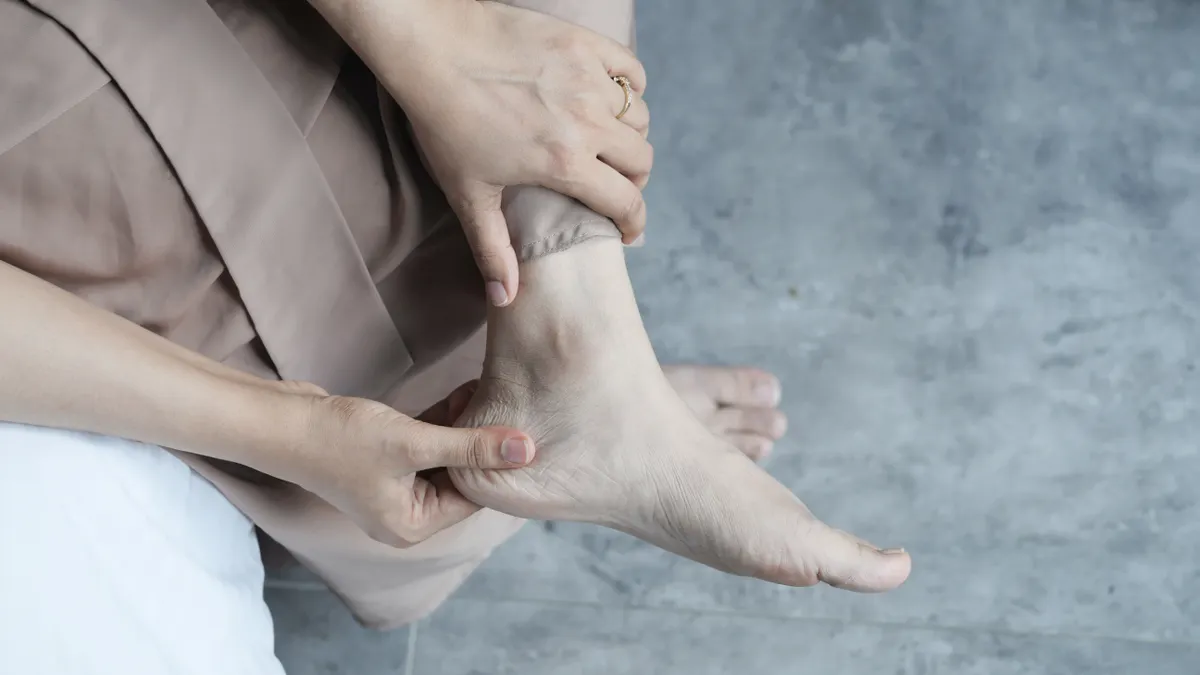
Picture this: you’re trying to settle in bed, but your feet feel tight, your ankles look puffy, and every position feels a little wrong. That pattern often comes from edema, the medical word for fluid swelling in tissue, and pregnancy makes it more common in the feet, ankles, and lower legs.
The truth is, not all swelling is equal. Mild swelling that builds through the day and eases overnight can happen because the uterus changes how blood returns from the legs, and pregnancy hormones shift fluid balance. A change in sleep can follow because heavy legs make it harder to get comfortable, stay in one position, or fall back asleep after a bathroom trip.
This topic is often discussed in review literature rather than large trials, which is one reason symptom patterns matter so much. A PubMed search done on 2026-10-29 found 565 human study records matching this query for 2016–2026; the 100 most relevant were read, and every share, median, and range below is computed from that sample. In the same sample, 29 records were tagged Review, 6 Systematic Review, 3 Meta-Analysis, 1 Observational Study, and 1 Randomized Controlled Trial, all from PubMed (NCBI).
- PubMed records can show how the field leans: much of what gets published here is review-level work, not trial evidence.
- That matters because sleep-and-swelling questions in pregnancy are often answered by pattern recognition, not one perfect test.
- If the pattern changes fast, the usual explanations stop being enough.
A few terms help here:
- Circulation means how blood moves through vessels and back to the heart.
- Fluid retention means the body is holding onto more water than usual.
- Edema means visible or felt swelling from that fluid sitting in tissue.
Why feet and ankles swell more at night
Picture this: you’ve been upright for hours, maybe sitting at a desk or standing at a sink, and by evening your socks leave deep marks. That is the classic time for pregnancy swelling to show up, because gravity pushes fluid into the lower body all day and lying still changes how that fluid redistributes.
The lower legs are the usual place because the veins and lymph channels have to work against gravity. In pregnancy, that job gets harder. The uterus can press on large veins, and that can slow the return flow from the legs. The result is often leg heaviness, tight shoes, and ankles that look rounder by night than they did in the morning.
That pattern can disturb sleep in a few direct ways:
- The skin and tissue feel tight, so one position gets uncomfortable faster.
- Legs may feel heavy enough that turning over takes effort.
- Swelling can make the feet sensitive when blankets press on them.
- A full bladder, common in pregnancy, may wake you often enough to notice the swelling more.
In a sample of 100 PubMed records read for this topic, the median publication year was 2021. The same abstract sample showed a median planned enrolment of 108 participants, which is typical of a field with many small studies rather than large ones. Median duration figures reported in abstracts were 26 weeks, and the median dose figure that appeared in those abstracts was 650 mg; those are study-report numbers from PubMed, not recommended doses for readers.
On the flip side, not every swollen ankle is about sleep. Some people sleep poorly first, then notice swelling only because they finally look at their legs in the middle of the night. That’s why timing matters.
- Swelling that is worse after a long day points more toward positional fluid pooling.
- Swelling that is sudden, uneven, or painful needs a different level of concern.
- Swelling with breathing trouble is not a “wait and see” problem.
How to tell normal swelling from something more serious
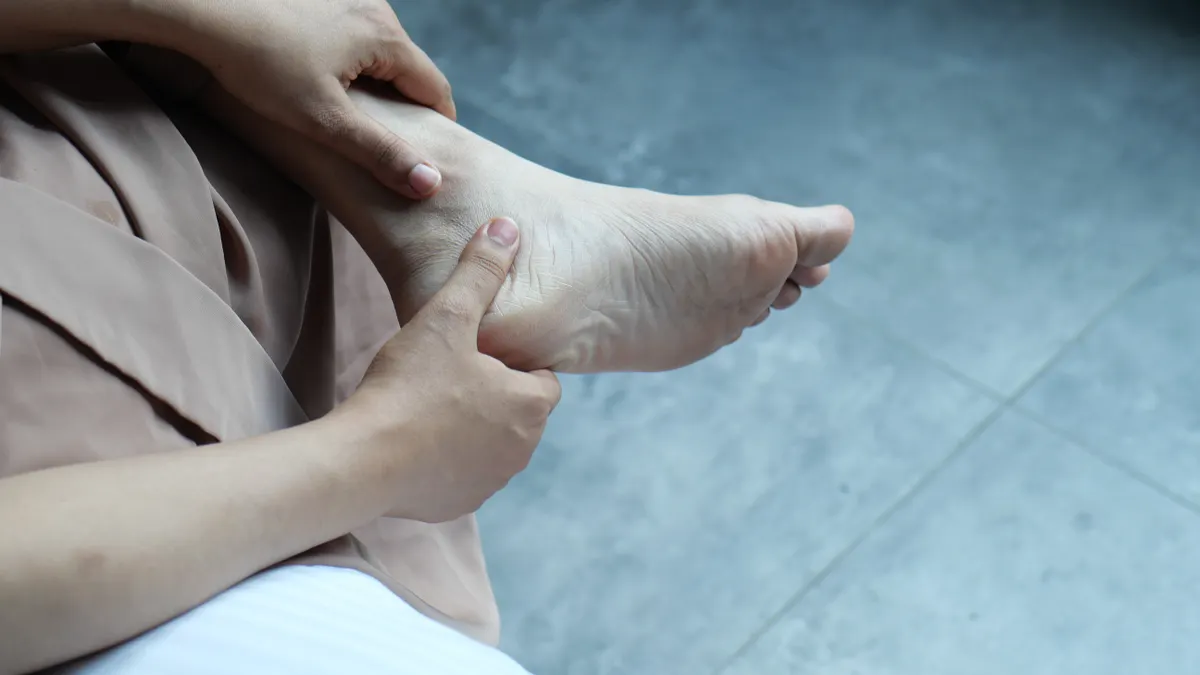
Picture this: you wake up at 2 a.m., notice your socks are tight, and wonder if it is ordinary pregnancy swelling or something you should report. The difference is usually in the pattern, the side it shows up on, and the symptoms that travel with it.
Here’s the catch: edema alone can be common, but edema plus another symptom changes the meaning. Swelling that is mainly in both feet and ankles, comes and goes, and improves after rest is more consistent with fluid pooling. Swelling that is sudden, one-sided, or paired with headache, vision changes, chest symptoms, or severe upper abdominal pain needs prompt medical attention.
What to watch for:
- Both feet and ankles: more often a pregnancy fluid pattern.
- One leg more than the other: more concerning for a circulation blockage or clot.
- Redness, warmth, or pain in one calf: not typical “normal swelling.”
- Face or hand swelling that comes on fast: can matter more than ankle puffiness.
- Shortness of breath or chest pain: needs urgent evaluation.
A general clinic visit may include blood pressure, a urine check, and a leg exam. Those are common first steps because pregnancy swelling can overlap with conditions that affect blood pressure and circulation. The point is not to self-label the swelling; it is to notice the pattern early enough to ask the right question.
- Normal swelling usually has a steady, bilateral pattern.
- Concerning swelling usually breaks that pattern.
- A sleep complaint can be the clue that makes the pattern visible.
What you can check before you go back to bed
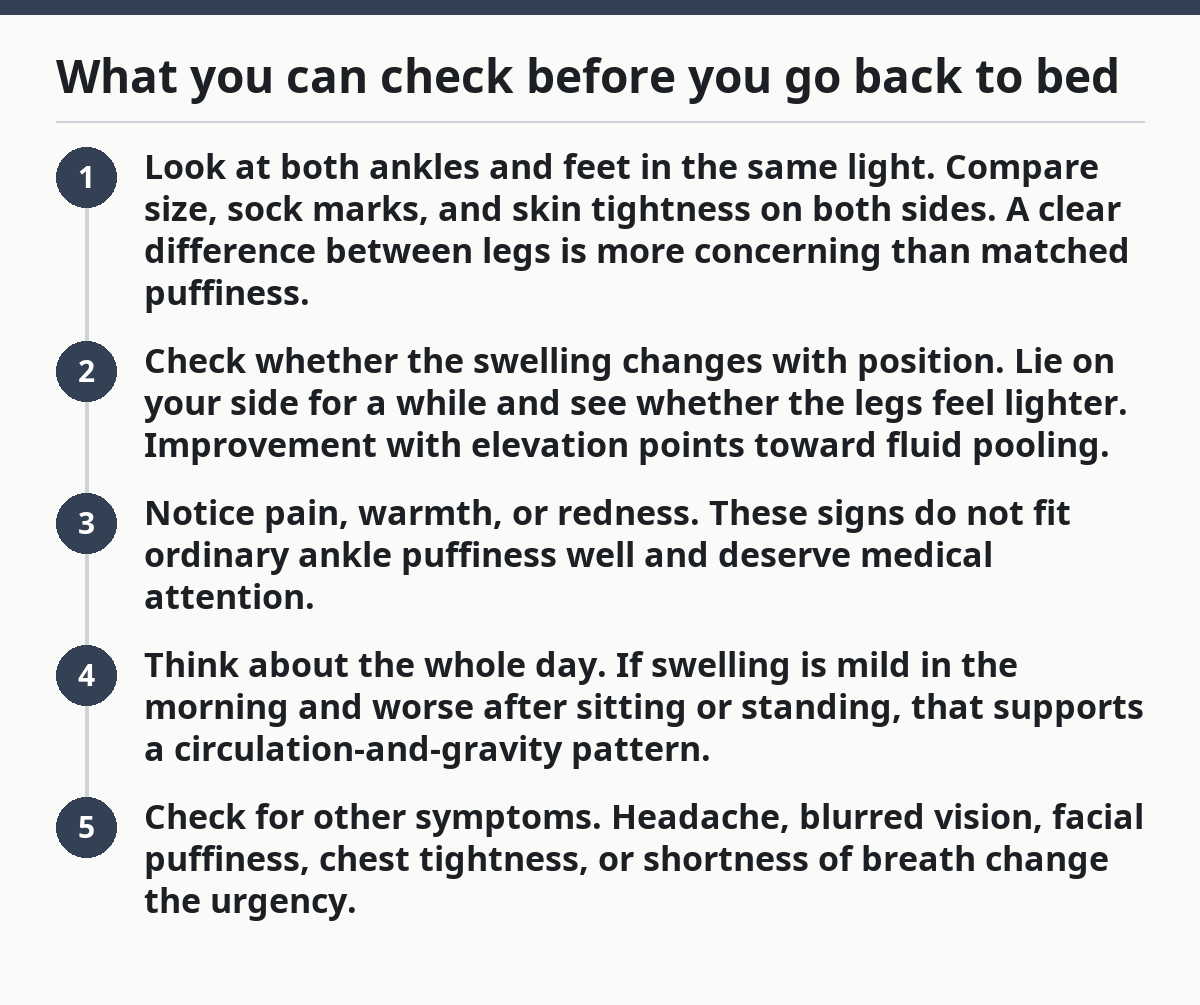
Picture this: you’re tired, you want relief now, and you also want a way to tell whether the swelling is just annoying or worth reporting. A quick check of 5 things can help sort that out without guessing.
- Look at both ankles and feet in the same light. Compare size, sock marks, and skin tightness on both sides. A clear difference between legs is more concerning than matched puffiness.
- Check whether the swelling changes with position. Lie on your side for a while and see whether the legs feel lighter. Improvement with elevation points toward fluid pooling.
- Notice pain, warmth, or redness. These signs do not fit ordinary ankle puffiness well and deserve medical attention.
- Think about the whole day. If swelling is mild in the morning and worse after sitting or standing, that supports a circulation-and-gravity pattern.
- Check for other symptoms. Headache, blurred vision, facial puffiness, chest tightness, or shortness of breath change the urgency.
If you keep a note on your phone, write the time, which side is worse, and whether rest helped. That small record can be more useful than memory at the next appointment.
- A simple comparison helps separate ordinary pooling from a changing problem.
- The timing of the swelling matters.
- One-sided change deserves more caution than symmetric puffiness.
What helps a lot, and what only helps a little
Picture this: you are trying to sleep on your side, but your lower legs feel heavy and your ankles seem to throb with every shift. The goal is not to “cure” swelling at home; it is to make sleep easier while the body is doing what pregnancy bodies often do.
Elevation is one of the simplest tools. Raising the feet above heart level for a stretch of time can help fluid move out of the lower legs. That does not need to be extreme; a few pillows are often enough to change how the legs feel. The key is that the legs are not just bent at the knees — they need a position that lets fluid drain.
Compression socks can also help some people by squeezing the lower leg gently and supporting venous return, the movement of blood back toward the heart. Fit matters. A sock that bunches at the ankle or pinches behind the knee can feel worse, not better.
A practical approach often includes:
- Side-lying with a pillow between the knees.
- Feet raised for part of the evening.
- Short walks or ankle circles during the day to keep blood moving.
- Avoiding long still periods in one posture.
- Compression socks worn during the day if a clinician says they are appropriate.
These steps are about comfort and circulation, not force. If a position makes swelling worse, stop using it. If the leg becomes more painful or one side changes more than the other, that is not a comfort issue anymore.
- Elevation helps pooling more than it helps a true circulation emergency.
- Compression can help if it fits correctly.
- Movement is often the missing piece.
When swelling and poor sleep in pregnancy need prompt care
Picture this: you are dealing with poor sleep, but the swelling is no longer just a nuisance. The threshold for getting checked is lower in pregnancy because the same symptom can be harmless one week and a warning sign the next.
One leg is much more swollen than the other: that asymmetry can point to a circulation problem — contact a clinician promptly.
The swollen area is painful, warm, or red: that pattern is not typical simple pregnancy puffiness — seek urgent assessment.
Shortness of breath or chest pain appears: that can signal a serious problem — get urgent help now.
Swelling comes with headache, vision changes, or sudden face/hand puffiness: that can go with blood pressure problems — speak to a clinician the same day.
The swelling appeared quickly or is getting worse fast: that change needs review — do not assume it is routine.
Clinical trials on this topic are limited, and that fits the broader literature. ClinicalTrials.gov listed 16 registered trials for the term on 2026-10-29; 6 were completed, 4 were unknown, 3 were recruiting, and 2 were enrolling by invitation. The median planned enrolment was 108 participants, which shows how small many studies are in this area.
That lack of big trial data is one reason symptoms matter so much. Sleep trouble plus swelling is not something to brush off when the pattern shifts.
What the evidence does and does not say
Picture this: you search because you want a clean answer, and what you find is a mix of reviews, small studies, and a few trials. That is exactly what this topic looks like in the medical literature right now.
The PubMed sample for this query was weighted toward review papers: 29 of the 100 most relevant were Reviews, 6 were Systematic Reviews, and 3 were Meta-Analyses. That tells you the field has summaries, but fewer direct trials. It also means advice about swelling and circulation in pregnancy often comes from broader clinical understanding rather than one large, tidy study.
A few limits are worth saying plainly:
- Sleep disruption can be caused by swelling, but swelling is not the only reason sleep gets worse in pregnancy.
- Fluid retention can be normal, but normal does not mean “ignore it.”
- Circulation discomfort is a symptom pattern, not a diagnosis by itself.
- Compression socks may help comfort, but they are not a fix for every cause of swelling.
If you want the broader map of pregnancy sleep symptoms, this page sits under the hub on pregnancy sleep symptoms and health signals, where the other symptom patterns are separated out more cleanly.
- Reviews dominate the evidence here.
- Big trial numbers are limited.
- Symptoms still guide the first call.
Why do my legs swell at night during pregnancy?
Legs often swell at night because fluid collects in the lower body during the day, especially after standing or sitting for long periods. Pregnancy also changes circulation and fluid balance, so ankles and feet can look puffier by evening. If the swelling is sudden, one-sided, or painful, that pattern is different and should be checked.
Can swelling affect sleep in pregnancy?
Yes, swelling can make sleep harder by adding heaviness, tightness, and position discomfort in the feet and legs. It can also make turning over less comfortable, which wakes some people more often. If the swelling is mild and improves with rest, it is more likely to be a comfort problem than an emergency, but changing symptoms deserve attention.
When is swelling with poor sleep in pregnancy concerning?
Swelling is more concerning when it is one-sided, painful, red, warm, or comes with headache, vision changes, facial swelling, chest pain, or shortness of breath. Those patterns can point beyond normal fluid retention and need prompt medical review. Sudden or rapidly worsening swelling also deserves a same-day conversation with a clinician.
Drafted with AI; not yet reviewed by a person.
