
Last updated: November 19, 2026
Quick Answer: Pregnancy-related nocturia often means 1–2 night-time bathroom trips, and it is usually bladder pressure plus changing fluid balance. If you’re unsure what’s normal for your body, speak with a qualified clinician about your own situation. This guide breaks down why it happens, what can ease it, and when it deserves a checkup.
Key Takeaways
- Nocturia in pregnancy means waking from sleep to urinate, not just peeing more during the day.
- The bladder is often under pressure, and the kidneys may make more urine than usual.
- You can often cut night trips by changing fluid timing, easing bladder pressure, and avoiding evening bladder irritants.
- Less bladder space and more pelvic floor work can make urgency arrive sooner.
Picture this: you’re asleep, then the bladder hits full alarm again, and the walk to the bathroom feels like part of the night shift. That pattern is common in pregnancy, but it’s not all from “too much water.” Why you keep waking up to pee at night during pregnancy and what can reduce it often comes down to the uterus pressing on the bladder, fluid shifts, or irritation from the urinary tract. The guide below sorts out what’s happening and what tends to help.
What nocturia in pregnancy actually means
Nocturia in pregnancy means waking from sleep to pass urine, not just noticing that you pee more during the day. The term sounds clinical, but the experience is plain: your bladder fills faster or feels full sooner, and sleep gets broken. That can start early and often gets more noticeable later.
Picture this: you’re getting a solid block of sleep, then the pressure builds before morning and pulls you awake. The body is changing in more than one way at once, and the bladder is only one part of the story. The uterus grows, blood volume rises, the kidneys filter more, and the pelvis has less room to spare.
That’s why a generic “drink less” answer misses the point. Fluid intake matters, but so do timing, bladder compression, pelvic floor tone, and whether the urinary tract is irritated. PubMed-indexed human studies from 2016–2026 returned 565 records for this topic; the 100 most relevant were read, and the figures below come from that sample, computed on 2026-10-29 from PubMed (NCBI) and ClinicalTrials.gov using the stated search method.
- The sample included 29 reviews, 6 systematic reviews, and 3 meta-analyses in PubMed.
- ClinicalTrials.gov listed 16 trials for the term, with 6 completed, 3 recruiting, and 2 enrolling by invitation.
- The median planned enrolment was 108 participants, which tells you the evidence base is still fairly small and scattered.
The truth is, pregnancy sleep articles often talk about “sleep disruption” in the abstract. This one stays on the bathroom trips themselves, because that’s the symptom many readers are actually trying to make sense of. For the broader picture, the hub on pregnancy sleep symptoms and health signals sits above this page for a reason. See also the related page on pregnancy nighttime peeing causes and the guide to better pregnancy sleep.
Why you keep waking up to pee at night during pregnancy
You keep waking up to pee because the bladder is under pressure and the kidneys are often making more urine than usual. That combination is the usual engine behind nighttime urination in pregnancy, and it does not mean anything is “wrong” by itself.
Picture this: you’re lying on your side, then roll over and feel a sudden urge that wasn’t there 20 minutes ago. The uterus can press on the bladder, especially as pregnancy advances, so the bladder has less capacity before it signals “empty me now.” Even small amounts of urine can feel urgent.
The other piece is fluid handling. Pregnancy changes blood flow and kidney function, so the body may process fluid differently across the day and night. If you drink most of your fluids late, or if salty evening meals make you thirstier, more urine can show up after bedtime. That’s a timing problem, not always a volume problem.
A third piece is pelvic floor and bladder sensitivity. The pelvic floor is the sling of muscle that supports the bladder, uterus, and bowel. When it’s tired, tight, or under strain, urgency can feel stronger. The urinary tract can also get irritated by a UTI—a urinary tract infection—which can cause urgency, burning, or a sudden need to go.
- Pressure from the uterus: less bladder room, especially later in pregnancy.
- Fluid timing: more evening fluid can mean more nighttime urine.
- Pelvic floor changes: urgency can feel sharper when support muscles are stressed.
- Urinary tract irritation: a UTI can mimic “normal pregnancy peeing” and needs attention.
On the flip side, waking once at night is different from waking many times with pain, fever, or a strong burning feeling. If those show up, the pattern deserves attention.
How can I reduce nighttime bathroom trips while pregnant?
You can often reduce nighttime trips by shifting fluid timing, easing bladder pressure, and cutting the habits that fill the bladder right before sleep. The goal is not to dehydrate yourself; it’s to move urine-making earlier in the day and make bedtime less of a squeeze.
Picture this: you still drink normally through the day, but the last part of the evening is calmer, lighter, and less rushed. The changes below are simple, but they work best when they’re used together. Pick the ones that fit your body and your day.
- Move most fluids earlier in the day. Drink steadily before late afternoon, then taper in the 2–3 hours before bed. Verify that your mouth is not dry and your urine is still pale yellow. If you’re getting headaches, dizziness, or dark urine, you may have cut back too hard.
- Stop large drinks close to bedtime. Keep the last drink small unless you need it for medication or to ease thirst. Verify that you’re not chugging a full glass right before lying down. If you are waking from thirst every night, mention it to a clinician.
- Use the bathroom right before sleep. Make this the last stop in your bedtime routine, after brushing your teeth. Verify that you empty comfortably, not by straining. If you feel incomplete emptying every night, that can point to pressure or irritation.
- Cut bladder irritants in the evening. Caffeine, fizzy drinks, and acidic drinks can make urgency worse for some people. Verify whether tea, coffee, cola, or sparkling drinks are part of your late routine. If symptoms persist even when you avoid them, the cause is probably not just the drink.
- Try a side-lying sleep position. Side sleeping can reduce pressure on the bladder compared with lying flat on your back. Verify that your abdomen and pelvis feel less compressed. If a position makes pain, numbness, or breathlessness worse, switch and mention it at your next visit.
- Support pelvic comfort. A pillow between the knees or under the belly can reduce strain through the pelvis and lower back. Verify that you’re not twisting the hips. If the discomfort is sharp or one-sided, don’t assume it’s just posture.
- Track the pattern for 3 nights. Note what time you last drank, how often you woke, and whether the urge was sudden or gradual. Verify whether evening habits line up with worse nights. If the pattern changes fast or comes with pain, that is a different problem.
A simple routine can help, especially when it lowers the amount you drink right before sleep. If it doesn’t, that does not mean you failed; it means the bladder pressure may be the bigger driver.
What changes in the bladder and pelvic floor make this worse?
Your bladder has less spare room, and the pelvic floor has more work to do, so the same amount of urine can feel urgent sooner. That is the core mechanical reason many pregnant people notice more bladder pressure at night.
Picture this: you lie down, gravity shifts, and the pressure inside the pelvis feels different than it did standing up. The uterus is the obvious change, but not the only one. The bladder sits right in the path of that growth, and the pelvic floor has to support more weight as pregnancy continues.
The pelvic floor is easy to ignore until it starts sending signals. If the muscles are tense, weak, or both, you may feel urgency, leakage, or a hard-to-ignore “now” sensation. That does not mean you should start random Kegels without guidance if they cause pain. In some people, over-tight muscles need release more than strengthening.
Fluid intake still matters here, but the relationship is indirect. A full bladder meets a smaller storage space. That is why the same bedtime drink that never bothered you before pregnancy can suddenly lead to a 2 a.m. bathroom trip.
A useful rule of thumb: if the urge comes with a sense of pressure low in the pelvis, posture and compression are probably part of the picture. If it comes with burning, pain, cloudiness, or a strong smell, think urinary tract irritation instead. See the symptom guide on pregnancy bladder pressure and the article on UTI symptoms in pregnancy for more detail.
When should nighttime urination in pregnancy be checked?
Nighttime urination should be checked when it comes with pain, burning, fever, blood, strong thirst, or a sudden change from your usual pattern. Those signs can point to something beyond ordinary pregnancy bladder pressure.
Picture this: the symptom stops looking like a sleep nuisance and starts looking like a body signal. That is the line where a qualified clinician should hear about it. Pregnancy is not the time to shrug off urinary symptoms that are changing fast or feeling wrong.
- Burning or pain when you pee: this can suggest a urinary tract infection, not normal pressure — contact a clinician soon.
- Fever, chills, or back pain: this can mean the urinary tract infection is higher up — get medical advice promptly.
- Blood in the urine: this is not something to file under “pregnancy stuff” — ask for evaluation.
- Sudden thirst with lots of urine: this may need review for causes beyond bladder compression — mention it at your visit.
- Leakage plus trouble emptying: this can suggest pelvic floor or bladder emptying issues — bring it up.
- A rapid change in pattern: if the number of trips jumps sharply over a short time, that deserves a check.
On the flip side, waking once or twice without pain can still be within the range of common pregnancy symptoms. The issue is the pattern around it. If the symptom is paired with discomfort, fever, or a sense that something is off, that is the part to report.
Common mistakes that make the problem worse
You make the bathroom trips worse when you change the wrong thing, at the wrong time, or for the wrong reason. Most of these mistakes are understandable, but they can leave you dehydrated, still awake, and still waking to pee.
Picture this: you try to solve the problem fast, so you stop drinking much of anything after lunch. That often backfires. The bladder may still irritate, and the rest of you feels lousy.
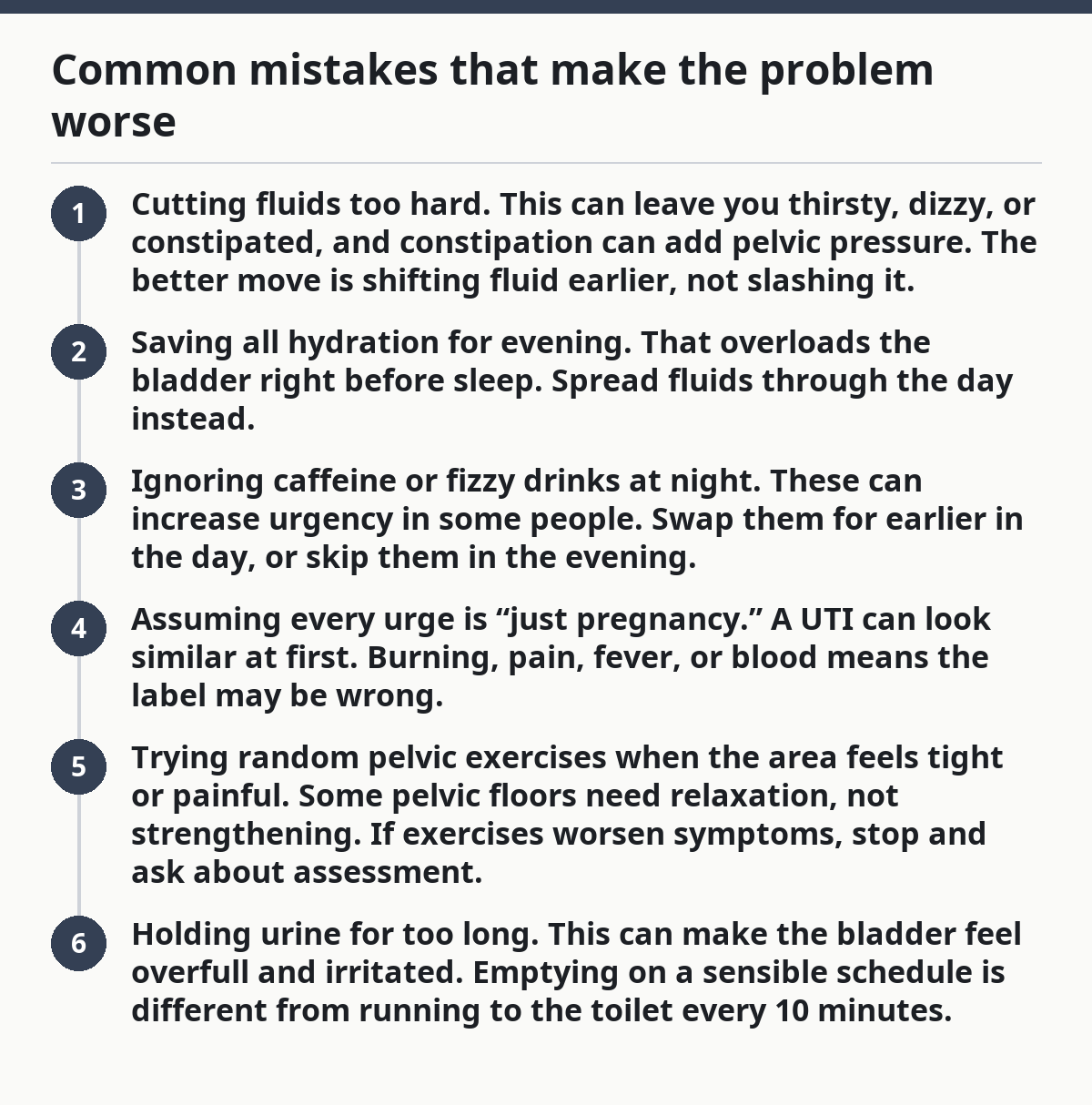
- Cutting fluids too hard. This can leave you thirsty, dizzy, or constipated, and constipation can add pelvic pressure. The better move is shifting fluid earlier, not slashing it.
- Saving all hydration for evening. That overloads the bladder right before sleep. Spread fluids through the day instead.
- Ignoring caffeine or fizzy drinks at night. These can increase urgency in some people. Swap them for earlier in the day, or skip them in the evening.
- Assuming every urge is “just pregnancy.” A UTI can look similar at first. Burning, pain, fever, or blood means the label may be wrong.
- Trying random pelvic exercises when the area feels tight or painful. Some pelvic floors need relaxation, not strengthening. If exercises worsen symptoms, stop and ask about assessment.
- Holding urine for too long. This can make the bladder feel overfull and irritated. Emptying on a sensible schedule is different from running to the toilet every 10 minutes.
Earlier hydration, one planned bathroom trip before bed, and attention to warning signs is the most practical alternative. That combination solves more cases than dramatic fixes do.
What if the usual tips do not help?
If the usual tips do not help, the cause may be less about habit and more about pressure, irritation, or another urinary issue. That is when the standard advice stops being enough and the symptom needs a closer look.
Picture this: you’ve already shifted fluids, skipped late caffeine, and still wake several times a night. At that point, the problem may be driven by the uterus pressing harder on the bladder, or by a urinary tract issue that needs assessment.
Clinical research on this topic is active but not huge. On ClinicalTrials.gov, 16 registered trials matched the term; 13 of 16 were listed at Na, and only 1 of 16 was Phase 3. The median planned enrolment was 108 participants. That tells you why advice often leans on pattern recognition and basic mechanisms instead of a single magic fix.
This is also where broad advice loses value. A reader with simple nocturia needs fluid timing and comfort measures. A reader with burning, fever, or pelvic pain needs a different path. If the symptom is disrupting sleep most nights, or the pattern changes in the third trimester, it is worth bringing up rather than trying to outlast it. See the pregnancy urinary symptoms page and the when to call your midwife or doctor checklist.
What a good result looks like
A good result is fewer wake-ups, less urgency, and a calmer last hour before sleep, even if the symptom does not vanish completely. That’s a realistic target in pregnancy, not a perfect one.
Picture this: you still may need one bathroom trip, but the night no longer feels chopped into pieces. That is a meaningful improvement. Progress, not perfection, is the goal here.
A reasonable sign that the plan is working is that your evening drinks no longer land right at bedtime, the urge feels less sudden, and the bathroom is not the first thing you notice when you wake. If the urge remains painful, noisy, or disruptive no matter what you change, the issue is probably not only habit. That is the point to ask for review.
FAQ
Is it normal to pee a lot at night during pregnancy?
Yes, waking to pee at night is a common pregnancy symptom.
Drafted with AI; not yet reviewed by a person.
